















The Invisible Backbone of Ground Operations: The Importance of Engineer Reconnaissance
Engineer reconnaissance represents an important and highly specialized combat capability within modern armed forces, without which the maneuvering of ground vehicles is practically impossible. Engineer reconnaissance personnel must be able to assess the passability of roads and detect and analyze minefields and improvised explosive devices. They assess the load-bearing capacity and condition of bridges and examine the characteristics of waterways to ensure the safe passage of their own units. In the Czech Armed Forces, this activity is divided into so-called “wet” and “dry” reconnaissance, which requires soldiers to possess a high level of physical fitness and mental resilience.
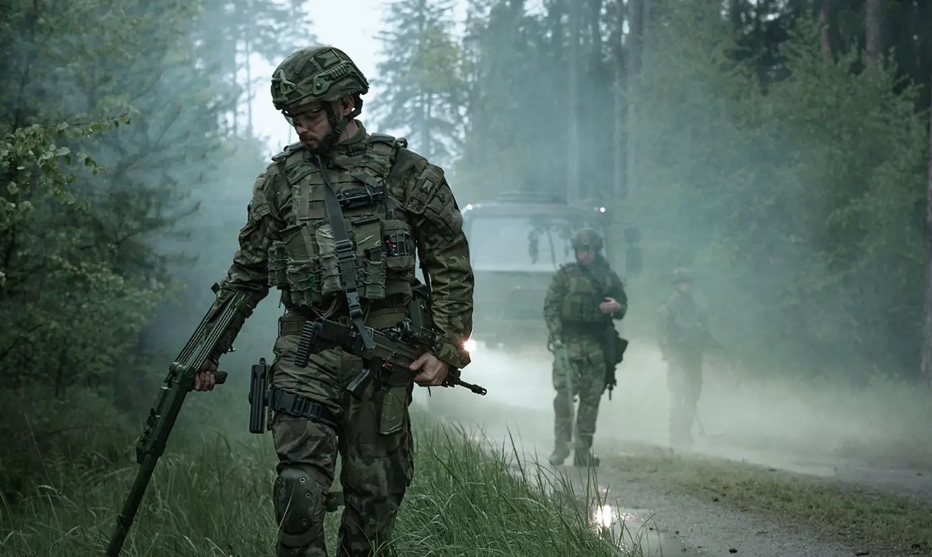
The ability to maneuver has always been a fundamental prerequisite for the success of any military operation. In order for mechanized, armored, and other units to move effectively, maintain a pace appropriate for the operation, and avoid unnecessary casualties, it is necessary to have accurate information in advance about the terrain and the enemy’s actions. In this regard, engineer reconnaissance serves as a “telescope” that reveals what lies ahead of the moving units. Unlike traditional combat reconnaissance, engineer reconnaissance focuses primarily on a more technical analysis.
Supporting the movement of friendly forces and, conversely, restricting the enemy’s movement form the basis of engineer reconnaissance support. Information gathered by engineer reconnaissance personnel is distributed to the command and control system, where it is used to make decisions regarding the movement of units, the speed at which a movement can be carried out, and, if necessary, where the intervention of engineers with heavy equipment will be required.
From an intelligence perspective, the Czech Armed Forces’ military reconnaissance is categorized according to the forces employed – namely, ground, air, combat, and others. Within the engineering corps, however, a distinction has also emerged between “dry” and “wet” reconnaissance. In practice, these two domains constantly overlap. As one might expect, dry reconnaissance focuses on everything found on the surface – such as minefields and roadblocks. The task of wet reconnaissance is to determine whether there are various underwater threats to the movement of friendly units, or, conversely, to achieve the opposite effect and prevent the enemy from crossing a water obstacle.
In order for engineer reconnaissance personnel to carry out their work even in high-risk areas and under reduced visibility, they must have access to advanced optoelectronics. This primarily involves the need to use high-quality night vision goggles (NVGs), thermal imaging cameras, and specialized equipment for capturing geolocated photographs and videos. These recordings are then analyzed and serve as the basis for deployment. Today’s technology also includes the integration of remotely controlled and increasingly autonomous robotic systems, which minimize the risk of human casualties and greatly facilitate the reconnaissance mission itself.
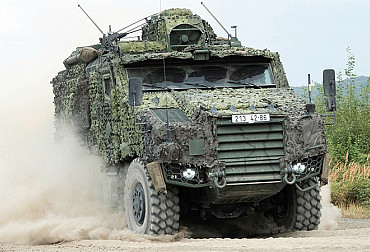
Although engineer reconnaissance personnel demonstrate excellent tactical and physical readiness, the engineering corps as a whole faces a number of shortcomings in the areas of technology, infrastructure, and logistics. This alarming problem is evident, for example, in the 2024 report by the Supreme Audit Office. The report clearly shows how the engineering corps has been neglected in recent years. Between 2010 and 2022, the Ministry of Defense had 3.5 billion crowns allocated from the state budget for the modernization of the engineering corps has been significantly neglected. However, only 9% of this amount – just under 314 million crowns – was actually spent on this process. Instead, most investment projects were postponed or canceled outright. One of the most significant findings is the deterioration of bridge-laying equipment. The bridge-laying equipment currently in use by the Czech Armed Forces is outdated and unsuitable for modern tanks.
This situation not only undermines the Czech Republic’s NATO commitments but also poses a risk to the domestic Integrated Rescue System (IZS). This entire case demonstrates that, although the AČR has high-quality personnel capable of performing demanding tasks such as engineer reconnaissance, the modernization of the corps has been significantly neglected in recent years, and this deficit must now be addressed.
The reality of modern symmetric conflict has shown that the earlier idealistic reliance on international conventions to eliminate anti-personnel and area mining (the Ottawa Convention) no longer holds true. These barriers are intended to significantly slow the enemy’s movement and channel their movement into prepared firing positions. The war in Ukraine clearly demonstrates that prioritizing speed exposes soldiers to mortal danger. And it is precisely in this regard that the importance of engineer reconnaissance equipped with proper technology is once again evident. Modern minefields no longer consist solely of pressure-activated mines but are equipped with more advanced systems featuring sensors, delayed-action fuses, and other components.
When identifying these fields, it is also necessary to consider the protection of the reconnaissance units themselves. The mission of a reconnaissance soldier, whose primary strength lies in covert movement—often deep behind enemy lines—is significantly more difficult on today’s battlefield, which is full of sensors and drones. It is therefore necessary to continually develop new ways to protect engineer reconnaissance personnel during operations. Without their work, no army would be able to move and transport troops effectively.
Engineer reconnaissance is an unassuming and often somewhat overlooked task, yet during critical phases it serves as the absolutely indispensable backbone of all ground operations. Those who regularly train in both ‘dry’ and ‘wet’ reconnaissance give the command a realistic opportunity to maneuver effectively and, consequently, to conduct an effective defense. Thanks to their experience, engineer reconnaissance makes seemingly invisible obstacles visible.
The real problem does not lie in the courage and qualifications of the personnel, but in the failure of procurement processes in recent years. A damning audit by the Supreme Audit Office (NKÚ) in 2024 fully highlighted these problems. Today’s security situation compels us to reverse these shortcomings as quickly as possible. As the war in Ukraine demonstrates, the modern battlefield of a symmetric conflict will likely continue to feature extensive minefields, destroyed bridges, and other disrupted transportation routes. For these reasons, the modernization of the entire engineering corps cannot be left at the very back of the modernization agenda.
Related