













Triads: The Hidden Logic of Power in 21st Century Hybrid Conflicts
A state that thinks in binary terms will no longer be able to defend itself. The security environment in Europe and the Czech Republic has entered a phase in which 20th-century mental models no longer work. The war in Ukraine, systematic Russian influence operations, cyberattacks on critical infrastructure, pressure on supply chains, and the gradual polarization of society show that threats no longer come in the form of clearly identifiable military strikes. They come slowly, invisibly, and often legally.
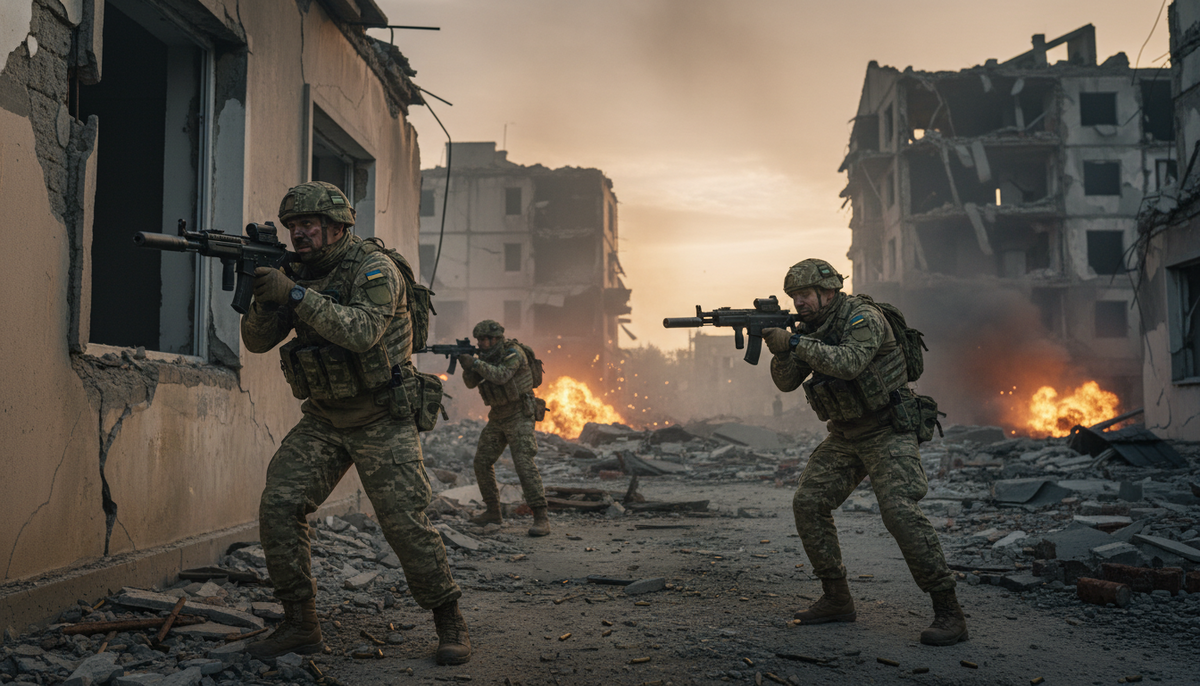
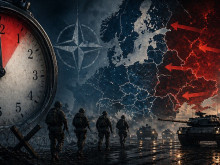
Today, a state is not defeated by tanks, but by the severing of its own internal ties. It is not about occupying territory, but about paralyzing decision-making, questioning legitimacy, and exhausting society. This is precisely why binary thinking, which still dominates political and institutional reasoning, fails. Categories such as "war–peace," "internal–external threat," or "civilian–military" do not correspond to the reality of a hybrid environment. Conflict takes place between these poles—in a gray zone where the state often hesitates, procrastinates, and loses initiative.
Triads are one of the few analytical tools that can capture this reality. They are not a theoretical luxury, but a necessity. They allow us to understand security as a system of relationships, not as a set of isolated capacities. Those who think in binary terms today react too late. Those who think in triadic terms have a chance to steer developments.
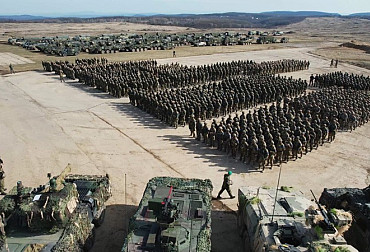
A triad is a model of three interconnected elements whose tension and balance determine the behavior of the entire system. While duality forces a choice between two sides and produces conflict, a triad allows conflict to be kept under control. In an environment of hybrid threats, where military, economic, information, and technological tools intertwine, this ability is crucial. A state that analyzes threats separately and by sector does not, in fact, analyze them at all.
Clausewitz's concept of war as an interaction between people, the military, and the state is often mistakenly considered outdated. In fact, it is more relevant today than ever before. Only its content has changed. People no longer refer only to the population, but above all to the information environment, public opinion, and social dynamics. The army is not just a collection of conventional forces, but includes cyber capabilities, indirect instruments, and alliance ties. The state is not merely an apparatus of power, but a system of legitimacy, decision-making capacity, and trust.
Modern attacks are not primarily directed at the army. They target the links between these three elements. The goal is not to defeat the army in the field, but to separate it from society. It is not about overthrowing the government, but about questioning its ability to make decisions. The result is a situation where the state formally exists, has institutions and armed forces at its disposal, but is unable to act quickly, decisively, and with public support. This is the ideal outcome of hybrid action.
This shift is most evident in the triad of hybrid conflict, which consists of kinetic, cybernetic, and cognitive dimensions. The kinetic dimension is visible, expensive, and politically sensitive. The cyber dimension is cheap, difficult to attribute, and highly scalable. The cognitive dimension is the least visible but strategically decisive. It is here that decisions are made about how society understands reality, whom it trusts, and what sacrifices it is willing to accept.
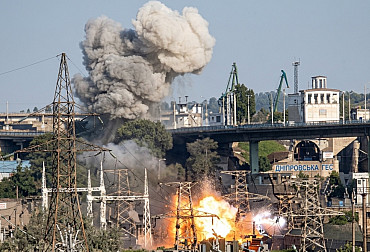

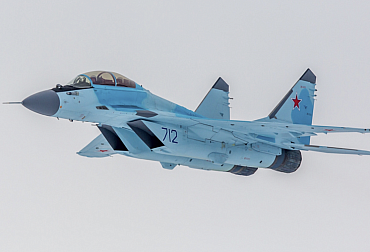
States that focus solely on the kinetic and cyber dimensions are fighting the wars of the past. The conflicts of the 21st century are won in people's minds. Whoever controls the cognitive space controls the pace, the framework, and the final outcome. This is not a metaphor, but the empirical experience of recent years.
This framework has extremely unpleasant implications for the Czech Republic. The Czech Republic is not threatened by direct conventional aggression, but it is highly vulnerable to hybrid warfare. An open economy, a high degree of digitization, strong dependence on global markets, and historically low trust in political institutions create an ideal environment for long-term, inconspicuous action. The goal is not the collapse of the state, but its gradual dysfunction.
Hybrid pressure in the Czech environment systematically targets the link between society and political decision-making. Questioning security threats, relativizing alliance commitments, attacking the legitimacy of defence spending, or portraying the army as a tool of foreign interests are not random. This is not free discussion, but a targeted disruption of Clausewitz's triad. The state finds itself in a situation where the army exists, political representatives make decisions, but society no longer gives its consent. This is a state of strategic paralysis.
From the perspective of the triad of kinetic, cybernetic, and cognitive dimensions, the situation in the Czech Republic is unbalanced. Conventional defence is relatively strong thanks to NATO. Cyber security is improving, but remains fragmented and reactive. The cognitive dimension has long been underestimated, downplayed, or confused with marketing. This is a strategic mistake. It is here that it will be decided whether the state will be able to withstand the crisis or whether it will collapse from within.
This presents an unpleasant reality for the Czech Armed Forces. The CAF is no longer just an instrument of military power, but a political and social actor, whether it likes it or not. Its ability to perform its tasks depends not only on technology and training, but also on the quality of its ties with society and political representatives. Public confidence in the army is high, but it is not indestructible. Hybrid warfare can deliberately isolate the army, call modernization into question, and create the impression that defence is a luxury or a foreign dictate.
At the same time, the concept of military readiness is changing. The cognitive dimension is becoming an operational environment, not a supplement. Commanders, planners, and political leaders must understand that the information and social space is a battlefield. An army that ignores this reality will be well-armed but strategically useless.
The triadic view is also reflected in the broader concept of state security, which is not based solely on deterrence. Deterrence without resilience leads to escalation. Resilience without the ability to respond leads to exhaustion. Response without legitimacy leads to a loss of trust. In the Czech environment, social resilience is the weakest link. Without it, any crisis measure becomes a political problem and a security risk.
The Czech Republic will not be tested by a massive military attack. It will be tested over the long term, systematically and inconspicuously. It will be tested to see whether it can maintain cohesion, determination, and the ability to distinguish reality from manipulation. In this sense, triads are not an academic exercise, but the last functional compass in an environment of hybrid threats.
A state that can protect the bonds between society, the military, and political power has a chance of succeeding. A state that focuses only on weapons, budgets, and formal structures will lose—without a single shot ever being fired.