














Why does Czech security policy require a configuration correction?
The Czech Republic now has an updated Security Strategy (2023), Defence Strategy (2023), and Concept for the Development of the Czech Armed Forces. These documents correctly identify the Russian Federation as the main security threat, reflect the importance of collective defence, emphasize the need to modernize the army, strengthen the resilience of society, and adapt to hybrid warfare. In terms of risk identification, the Czech security community cannot be accused of blindness. However, the problem lies elsewhere. The current security doctrine of the Czech Republic is predominantly capacity-based. It strengthens resources, builds capabilities, increases spending, and invests in technology. However, it only addresses the configuration of the system as a whole to a limited extent. In other words, it addresses strength, not architecture. In an environment of nonlinear threats, this is a fundamental limitation.
1. The capacity paradigm and its limits
The dominant assumption of current security policy is implicitly linear: we will increase defence spending to 2% of GDP, strengthen capabilities, modernize technology—and thereby increase stability. Similarly, in the area of economic security: we will support competitiveness and innovation, thereby strengthening resilience. In energy, we diversify sources and thereby increase security. This approach is based on the classic logic of balance of power and capacity thinking.
However, the modern state is not a linear system. It is a complex adaptive structure where small changes can have disproportionate consequences and where stability depends on the distribution of relationships between individual parts. In such a system, capacity growth does not automatically mean stability growth. If capacities are concentrated in a limited number of nodes, the system may gain strength but lose robustness. This is a key problem that Czech strategic documents systematically fail to address.

2. Entropic perspective: stability as distribution
The entropic strategy of the state is based on a simple thesis: stability is not a function of the volume of resources, but of their distribution. Entropy here does not mean chaos. It means the degree of distributional diversity. A system with low entropy is highly concentrated—efficient, but fragile. A system with higher entropy is more distributed – less optimized, but more robust.
Modern states have a natural tendency to optimize for performance. They eliminate redundancy, concentrate decision-making, specialize the economy, and centralize infrastructure. This increases efficiency and competitiveness. At the same time, however, it reduces the number of alternative adaptation trajectories. In a linear environment, this is not a problem. In an environment of nonlinear volatility, it becomes a structural weakness.
3. Confrontation with the Czech Republic's Security Strategy 2023
The Security Strategy correctly states that the security environment is complex, interconnected, and unpredictable. Nevertheless, the subsequent solutions remain largely capacity-based. The document talks about strengthening the resilience of society but does not work with the legitimization structure as a distributive variable. Polarization is mentioned, but it is not analyzed as a destabilizing factor. If trust is concentrated at the extreme poles and the center erodes, there is a decline in structural balance.
The situation is similar in the area of hybrid threats. The strategy correctly identifies disinformation, cyberattacks, and economic pressure. However, it does not mention that these tools primarily target the concentration points of the system—information nodes, economic dependencies, and energy bottlenecks. The strategy responds to symptoms, not the configuration.
4. Defence strategy: strength without configuration analysis
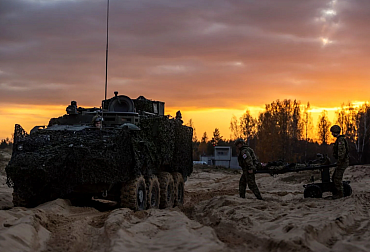
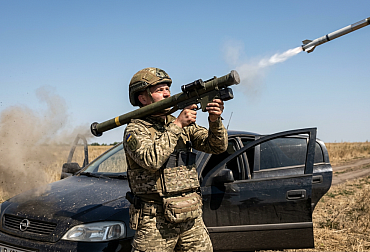
The Czech Republic's 2023 defence strategy emphasizes building the capabilities of the Czech Army, interoperability with NATO, and technological modernization. This is essential. From an entropic point of view, however, the question must be asked: what is the distribution balance between national and alliance capacities? Is there sufficient modularity? Are key functions redundant or concentrated?
High integration into NATO is a strategic advantage. At the same time, however, it represents a concentration of key defence functions outside the national level. An entropic perspective would require a systematic analysis of this dependency. The document focuses on strength, not architecture.
5. Economic and energy asymmetry
The Czech economy is highly open and specialized. This has brought prosperity. From a configuration perspective, however, it creates sectoral concentration. Geopolitical fragmentation or technological disruption can have a disproportionate impact.
The energy transition is politically presented as a path to greater security. However, every transition period is structurally the most vulnerable phase of the system. The old model is no longer stable, and the new one is not yet consolidated. There is increased volatility and asymmetry. Strategic documents describe the target state. They do not sufficiently analyze the transitional configuration.
6. Digital architecture as a hidden focal point
The Czech Republic's digital infrastructure is functional but structurally dependent on global platforms. Information plurality on the surface does not mean infrastructure sovereignty.
Hybrid operations exploit this concentration of nodes. Positive feedback loops of polarization are amplified in an environment where the distribution of communication channels is asymmetrical. Without configuration analysis, digital security remains reduced to a reaction against content, rather than architecture.
7. Proposal for an Entropy Audit of the Czech Republic
An entropy audit would be a regular, interdepartmental assessment of the structural balance of the state. Its aim would not be to create a new strategic document, but to supplement the existing doctrine with a configuration layer.
The audit would systematically assess:
- the degree of energy diversification and transition asymmetry,
- the sectoral and export concentration of the economy,
- the concentration of digital and information nodes,
- the balance between national and alliance defence capabilities,
- the distribution of political legitimacy and the degree of polarization.
The output would not be a list of threats, but a map of concentration points and asymmetries. Such an audit could be conducted every two years under the auspices of the State Security Council.
8. Why is configuration correction necessary?
Complex systems without regular configuration analysis tend to optimize for short-term performance. They eliminate redundancy, centralize control, and specialize capacities. This increases efficiency but reduces the number of alternative adaptation trajectories. In a nonlinear environment, small shocks can trigger disproportionate responses. Stability is not lost gradually, but suddenly. Czech security policy is currently building strength. This is correct. However, without configuration analysis, it risks building a strong but rigid system.
9. Final thesis
The Czech Republic is not a weak state. It is a highly optimized state. In a linear environment, this is an advantage. In an environment of hybrid threats and geopolitical volatility, it can be a risk. Both the Security Strategy 2023 and the Defence Strategy 2023 are adequate in terms of capacity. However, they lack a configuration perspective. Stability in the 21st century will not depend solely on how many resources we have. It will depend on how they are distributed.
The state's entropic strategy is not revolutionary. It is a correction of a blind spot. It raises a question that is rarely heard in Czech debate: We are not strong—but are we at least structurally balanced? The answer to this question will determine whether the Czech Republic remains stable in an environment that will no longer be linear.