















Chemists and EOD Specialists Conducted a Drill at an Illegal Laboratory
According to the scenario, an illegal chemical laboratory was discovered in the liberated territory. The facility may have contained chemical warfare agents, precursors for their production, and improvised explosive devices. Therefore, experts from the SIBCRA unit (Sampling and Identification of Biological, Chemical, and Radiological Agents) joined forces with bomb disposal experts from the EOD unit to carry out the operation. The exercise demonstrated how challenging operations are in an area where chemical risks overlap with the danger of explosion.
At first glance, it appeared to be an ordinary building. However, according to the scenario, it contained an illegal laboratory that could have been used to produce chemical warfare agents. The soldiers therefore had to proceed as if they were operating in an environment where toxic substances and explosive devices might be present. It was not merely a matter of locating a hazardous substance. The operation required the safe opening of an access route, the removal of explosive hazards, chemical reconnaissance, sample collection, documentation of findings, and the subsequent decontamination of all personnel and equipment that had passed through the contaminated area.
The training was based on a simulated scenario in liberated territory. The scenario called for an illegal chemical production facility to have been left behind by the enemy, which could be used not only as a weapon but also for propaganda purposes. According to the scenario, the laboratory contained blistering agents of the H and L types, specifically mustard gas and lewisite, as well as the precursors necessary for their production. The simulated laboratory included apparatus representing equipment for the synthesis and purification of the resulting products. “This is a mock-up of a production facility for these substances. There are two pieces of equipment. One is used for synthesis, the other for distillation or purification of the final products,” described Lieutenant Jakub Pavlík, an officer at the chemical laboratory.
The bomb squad had to be the first to enter
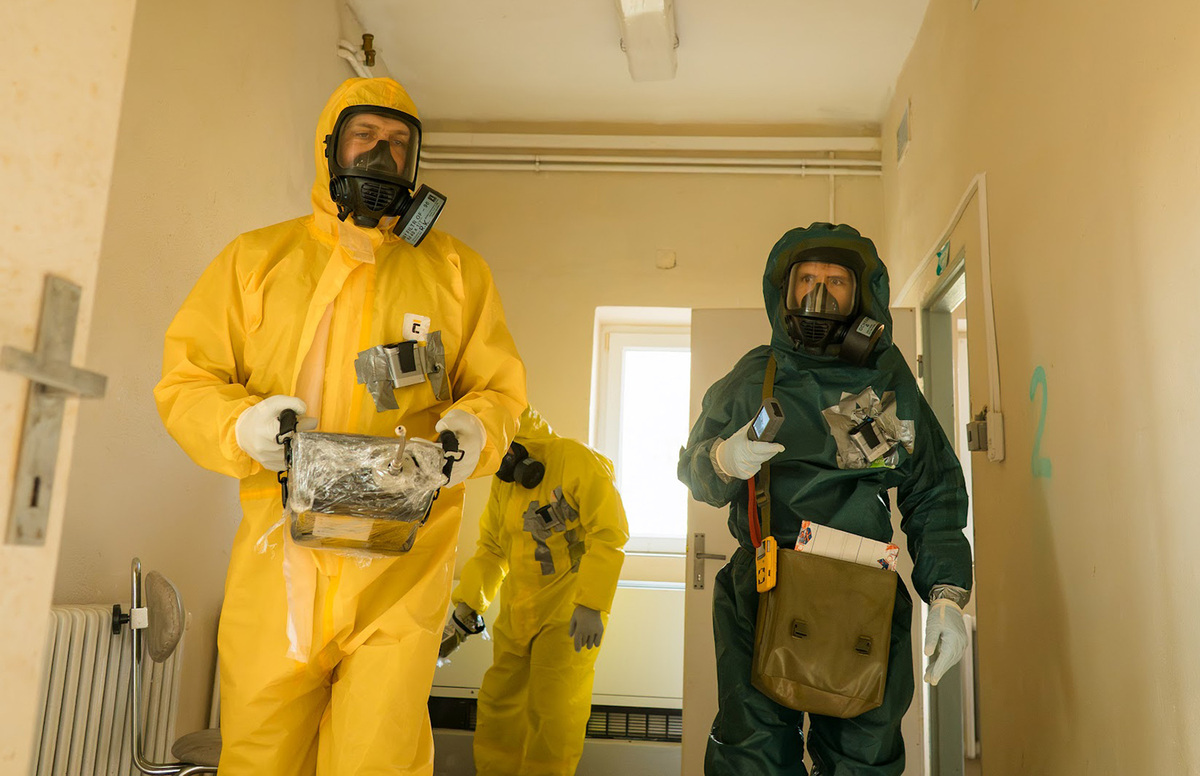
From the outset, the incident commander had to assume that, in addition to chemical substances, there might also be explosives or an improvised explosive device in the area. For this reason, a combined reconnaissance team consisting of EOD technicians and a chemical specialist was formed first. Even before entering the building, the team conducted a reconnaissance of the area surrounding the building. The chemical specialist used a detection device to look for possible signs of contamination, while the bomb squad assessed the safety of the access route and the risk of booby traps in the area.
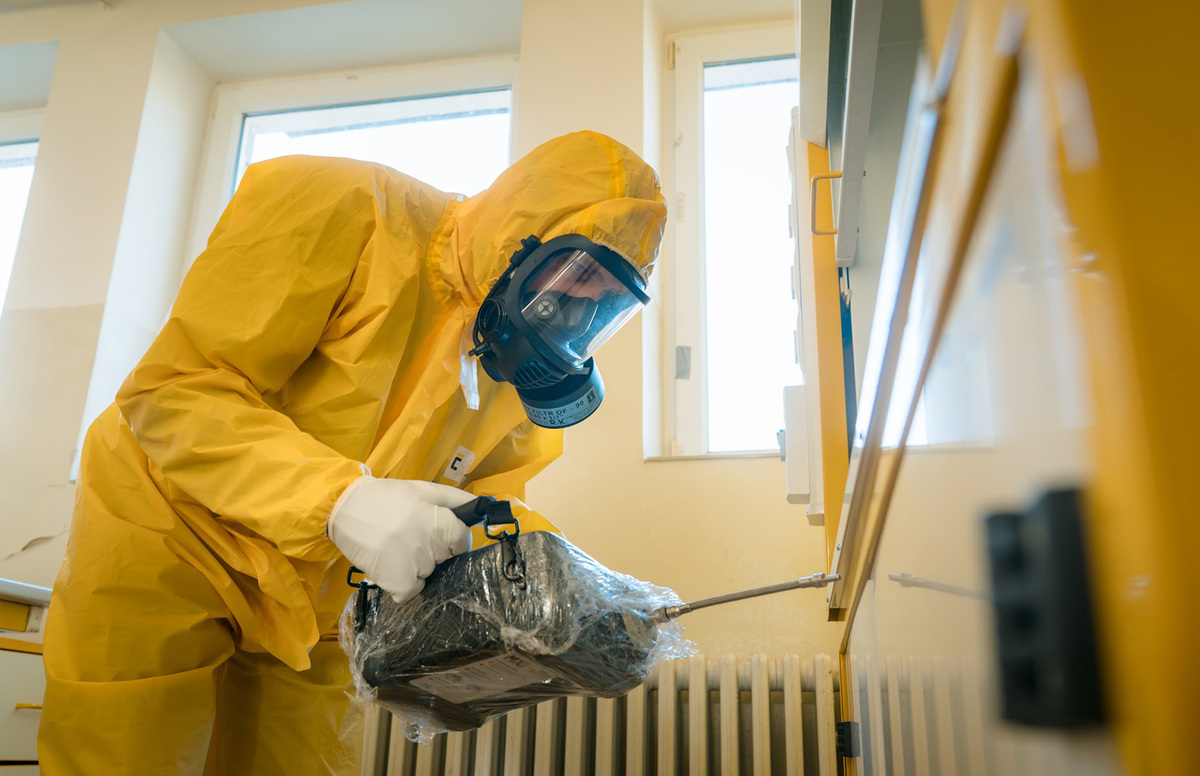
Only then did the joint team enter the building. The bomb squad moved from room to room, clearing a safe route to the laboratory. At the same time, a chemical specialist continuously monitored the environment for the possible presence of hazardous substances. In the room with the simulated laboratory, the team identified a suspicious object. To examine it, the bomb squad used a portable X-ray machine, evaluated the image, and, after confirming the presence of an improvised explosive device, proceeded to neutralize it. Only after the explosive threat had been eliminated could the incident commander decide to continue CBRN operations inside the building.
“The bomb squad was the first to arrive. Based on our recommendation, they entered the area wearing personal protective equipment, as there was a high probability that chemical warfare agents were present in addition to the explosives. The bomb squad first completed their part of the mission, then passed through our decontamination station, and subsequently we began addressing the CBRN issues ourselves,” explained the incident commander.
Cooperation between the bomb squad and CBRN specialists was one of the main goals of the training. In a situation like this, both teams must work as a single unit, because an explosive threat can directly impact the safety of chemical reconnaissance and the rest of the operation.
“Training exercises involving SIBCRA and EOD specialists enable an effective response to situations involving CBRN contamination where there is also a threat posed by explosives or explosive devices. When these two issues converge, an exceptionally complex operation arises that requires precise coordination and cooperation between specialists from both fields,” added the incident commander.


Chemical Reconnaissance Determines Next Steps
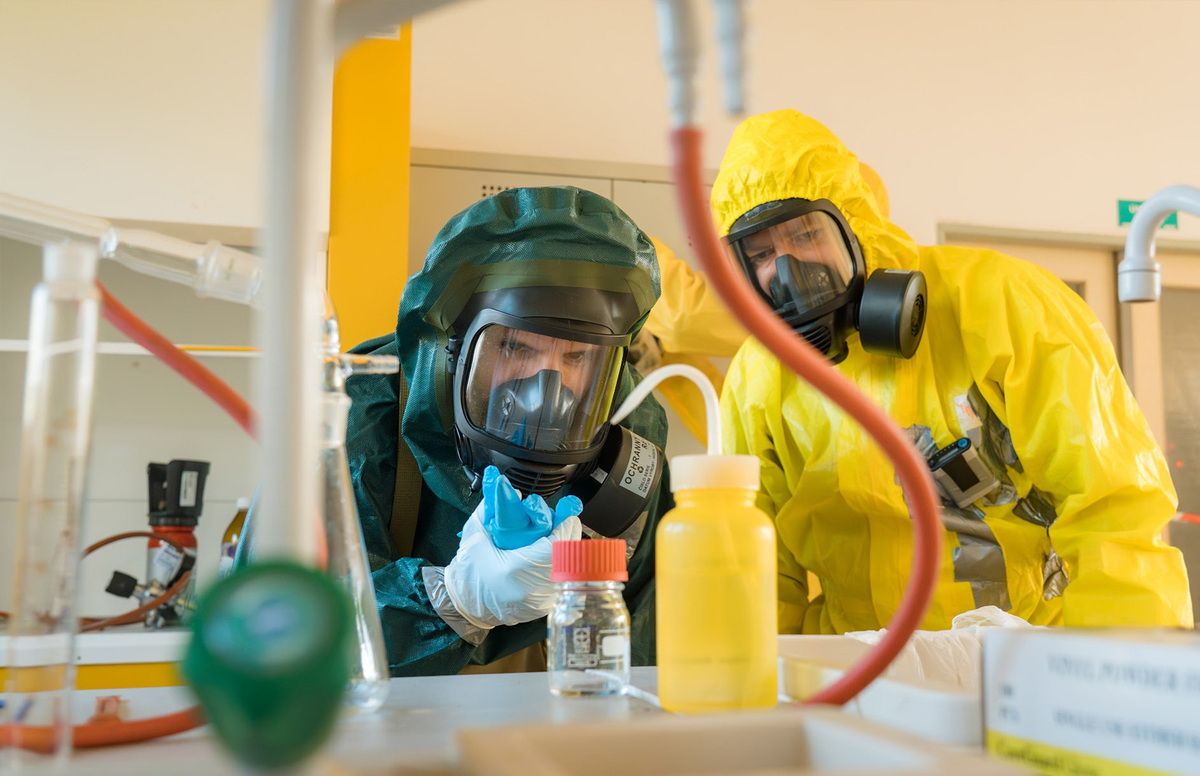
After neutralizing the explosive device, the main focus shifted to the CBRN issue itself. The chemical reconnaissance team was able to build on the initial findings from the area around the building and the laboratory and focus on a more detailed assessment of the areas of interest. The soldiers documented their findings, verified possible sources of contamination, and provided the commander with the information needed to decide on the next steps.
“The room of interest is located in the back. A laboratory has been set up there where they will identify suspicious substances and later take samples from them,” said Lieutenant Pavlík.
The SIBCRA team is a highly specialized unit designed to tackle the most complex CBRN tasks. In this case, training focused primarily on chemical agents, their identification, documentation, and subsequent sampling. The operation was divided into three main parts: chemical reconnaissance, sampling, and decontamination.
“The SIBCRA team is deployed to tackle the most complex tasks in the CBRN field. The team was called in to determine whether chemical warfare agents were present at the site and, if so, what the purpose of this laboratory was,” stated the incident commander.
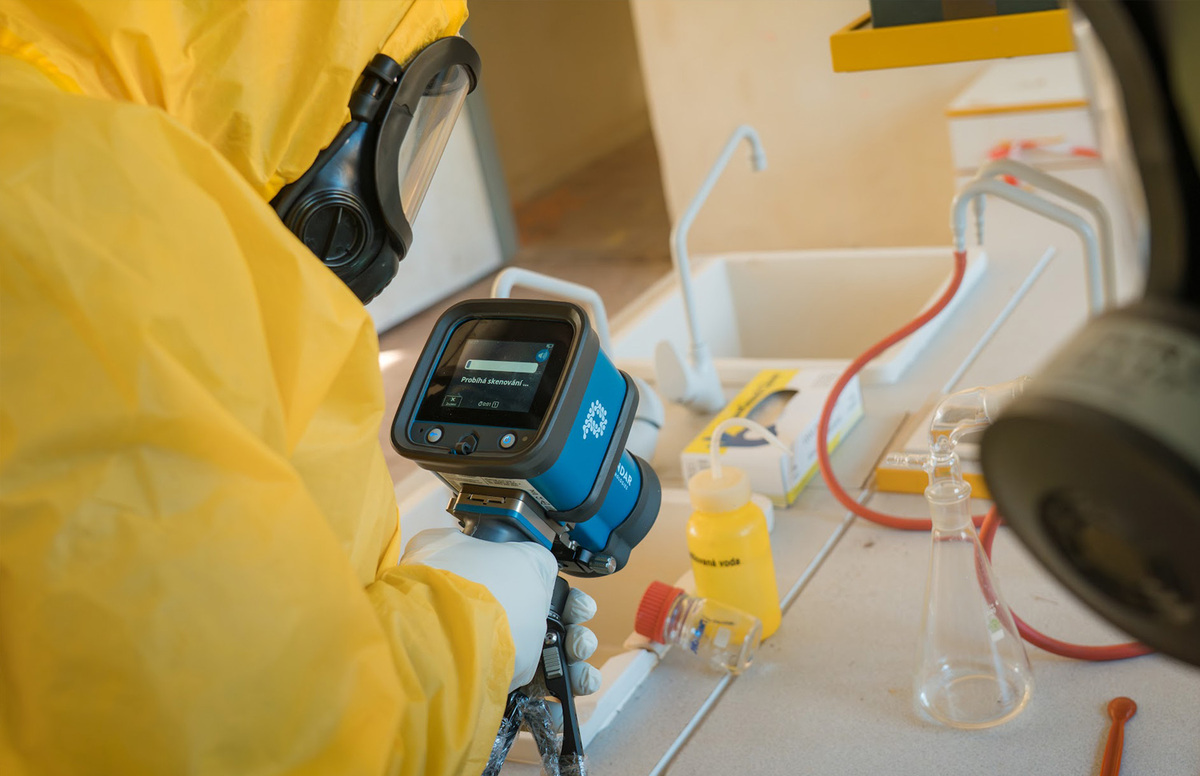
The commander maintained constant radio contact with the team in the so-called hot zone. He received continuous updates, adjusted operations, and, upon the reconnaissance team’s return, evaluated photographs and other findings. It is precisely these reports from the incident site and visual documentation that provide a comprehensive picture of the situation, based on which the commander can decide on the next steps or take appropriate measures.
“As the commander, I have a constant overview of what the team in the hot zone is doing at any given moment, and I direct their activities as needed. However, every scenario is very specific. We do, of course, have established procedures, but we often have to respond flexibly depending on how a particular incident unfolds,” explained the incident commander.
Based on information from the reconnaissance, samples of interest are identified, and a sampling team is dispatched to collect them. Samples are collected in accordance with standard operating procedures and the commander’s instructions. “Each sample must be treated individually. A number of factors must always be considered, including physical state, matrix type, substance type, etc. The sample must be properly collected, packaged, labeled, and transported so that it yields meaningful results for further analysis. Samples are sent to either stationary or mobile laboratories. More precise instruments are available there, and the analysis results are more reliable than what we can determine directly in the field. Although we work with relatively sophisticated equipment, these are still handheld devices that do not achieve the same level of precision as laboratory technology,” added the incident commander.
Decontamination stations protect both responders and support personnel
An integral part of the operation were the decontamination stations, which separate the potentially contaminated zone from the safer support area. Everyone who left the building or the incident area had to go through decontamination. The goal was to prevent the transfer of hazardous substances to other people, equipment, materials, or the command post.
The decontamination station was also prepared for emergency situations, including the possibility of extracting an injured responder from the building. “If a problem were to arise inside the building, we have an extraction unit ready. It would go in for the injured person, bring them out, decontaminate them, and then hand them over for further medical treatment,” described a member of the chemical corps from the decontamination station.
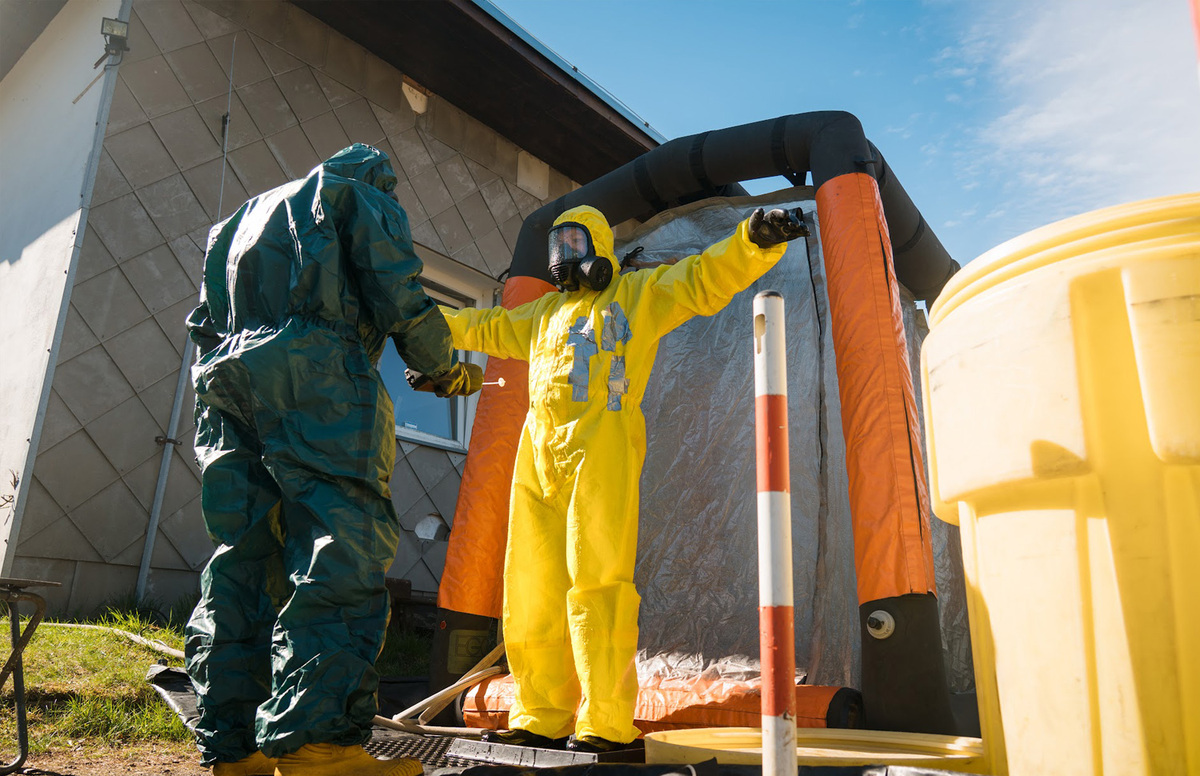
The decontamination facility itself consisted of several interconnected sections. Upon entering the facility, a soldier first decontaminates their gloves and mask then enters a shower stall where a neutralizing solution is applied to their protective suit. This was followed by an area where the mixture took effect and where footwear was simultaneously inspected and cleaned. If rinsing was insufficient, brushes could be used for mechanical cleaning. Another booth was used to rinse off the decontamination mixture, followed by a final inspection.
“If decontamination was unsuccessful, the soldier goes through the entire line again and the whole process is repeated until they are clean. Once everything is in order after the check, they are cut out of the disposable protective suit and then proceed to the decontamination station’s back area,” explained a member of the chemical corps.
Thorough decontamination was not limited to personnel. Once each team had completed its work, the equipment used—such as instruments, crates, equipment cases, and other supplies—was also treated separately. “Disposable protective suits are disposed of after use. Then the equipment is treated, and finally, our decontamination team also undergoes decontamination to eliminate any risk of chemical exposure to the responders,” added a member of the chemical corps.
The training demonstrated that responding to CBRN and EOD threats is not the work of a single specialist alone. It is a well-coordinated system in which pyrotechnicians, chemical reconnaissance, sample collectors, the decontamination team, laboratory personnel, and incident command all work in tandem. Every step has its place, and a mistake in one part can affect the safety of the entire team.
“Anyone leaving a chemically contaminated area must undergo decontamination. The goal is to prevent the spread of hazardous substances outside the hot zone and to protect both the responders and the entire command and support infrastructure,” summarized the incident commander.
Similar scenarios prepare ground forces specialists for situations in which they must respond quickly, professionally, and in a coordinated manner. In the modern battlefield environment, threats can be combined, concealed, and deliberately created to slow down the advance of units or endanger their safety. The ability to recognize such risks, safely isolate them, collect evidence, and protect personnel is therefore an essential part of military readiness.