
















Digital sovereignty index: the global distribution of digital power
Over the past decade, digital sovereignty has evolved from a political slogan into a hard security parameter. Today, states compete not only for territory, resources, or military capabilities, but also for control over data, semiconductors, cloud infrastructure, platforms, and artificial intelligence.
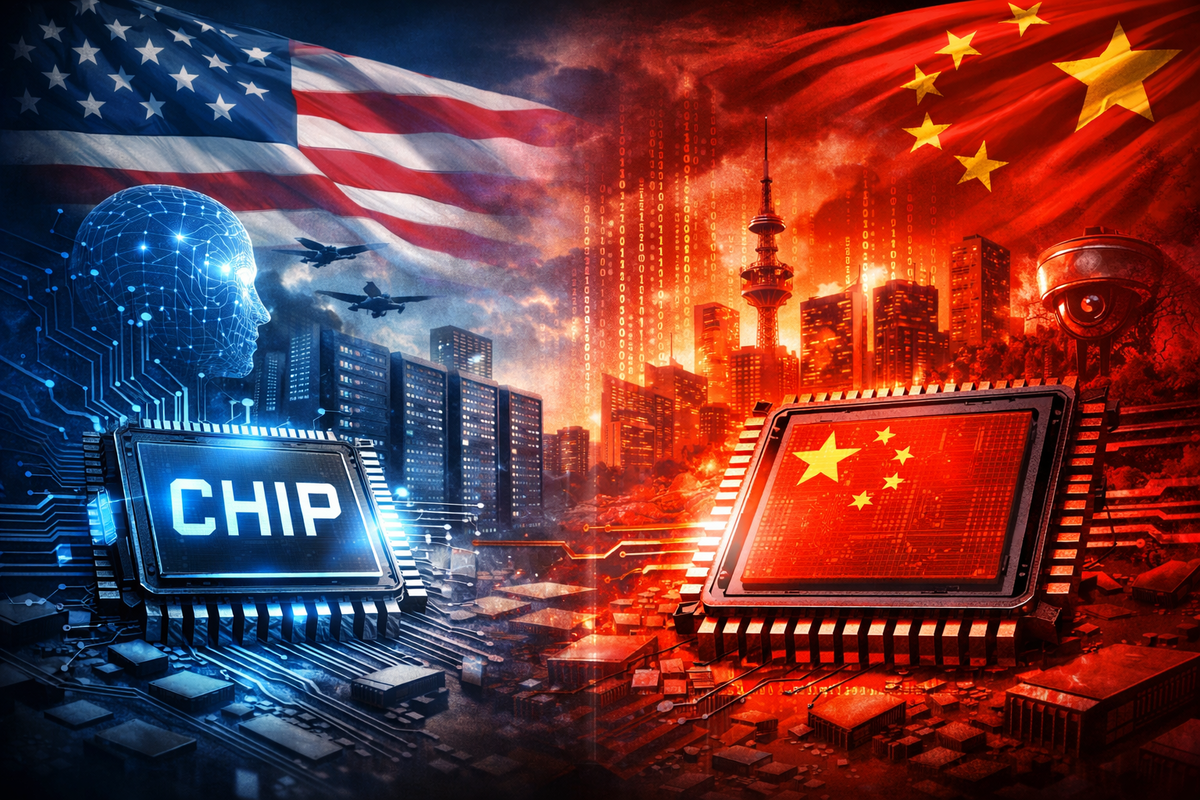
In a crisis situation, digital dependence can become a strategic vulnerability—just like energy or raw material dependence. The pandemic, supply chain disruptions, and technological rivalry between Washington and Beijing have shown that digital infrastructure is an integral part of a country's defense capabilities.
For systematic comparison, an analytical framework called the Digital Sovereignty Index (DSI 1.0) has been created, which evaluates countries according to five key dimensions:

- infrastructure sovereignty,
- semiconductor and hardware autonomy,
- data and cloud controls,
- platform autonomy,
- capabilities in the field of cyber defense.
Each dimension is rated on a scale of 0–20 points, with a maximum score of 100. The index does not assess the political quality of the regime or the level of democracy, but rather the state's ability to control the digital layers of its power. On a global scale, two actors dominate today: the United States and China. Both powers achieve almost comparable overall scores, but their models differ fundamentally.
The United States bases its digital sovereignty on technological dominance. The Silicon Valley innovation ecosystem, the dominance of hyperscalers, and control over the design of advanced semiconductors play a key role. The adoption of the CHIPS and Science Act represents an attempt to restore domestic manufacturing capacity and reduce dependence on Asian factories. In the area of cybersecurity, the US has extensive offensive and defensive capabilities, represented, for example, by the National Security Agency. The weakness of the American model remains its dependence on Taiwanese production of the most advanced chips and fragmented data protection regulations. The US's overall IDS score is approximately 88 points, which ranks it among the full-fledged digital superpowers.
China, on the other hand, is building a comprehensive model of controlled digital sovereignty. It has created its own digital ecosystem, in which companies such as Huawei and Alibaba Group play a key role. Through cybersecurity and data protection laws, a data localization system, and controls on cross-border information flows, the state maintains direct oversight of the digital environment. The Chinese model achieves an extraordinary level of control over data and platforms, but its weakness remains access to the most advanced lithographic technologies. China's overall IDS score is around 89 points, which puts it in the position of a structural competitor to the US.
The European Union represents a different type of digital power. Its strength lies primarily in its normative capacity. Through initiatives such as the Digital Services Act, the Digital Markets Act, and the European Chips Act, it seeks to regulate the global digital environment while strengthening its own industrial base. The European Commission plays an important role in promoting a strategy of digital autonomy at the EU level. However, the EU lacks dominant global platforms and comparable semiconductor production. Its average IDS score is approximately 67 points. The Union is therefore strong in the areas of regulation and data protection, but remains technologically dependent.



South Korea and Taiwan deserve special attention. Both economies are key links in the global semiconductor chain. Companies such as Samsung Electronics and TSMC control a significant portion of global production of advanced chips. Their digital sovereignty is high in the area of hardware, but geopolitical exposure poses a significant risk. The IDS rates both countries at around 77 points, which corresponds to strong strategic autonomy.
Israel offers another specific model. Its digital sovereignty is based primarily on cyber capabilities and security innovations. Military Unit 8200 has created an ecosystem from which a number of technology startups have grown. Israel does not have an extensive manufacturing base or global platforms, but its cyber capacity significantly increases its strategic relevance. Its overall score is around 65 points.
From a comparative perspective, several key conclusions can be drawn:
- Digital sovereignty is multidimensional, and no single state controls all layers of digital architecture.
- The world is shaping up as a digitally bipolar system, with the US and China representing two different but comparably powerful structures.
- Semiconductors have become a key geopolitical resource—controlling their production is analogous to controlling energy resources in the 20th century.
- Cyber defense acts as a multiplier of sovereignty, enabling even smaller states to increase their strategic weight.
For the Czech Republic, these findings lead to a realistic conclusion: full digital sovereignty is not an achievable goal. However, selective sovereignty—that is, strengthening those layers that have a direct impact on state security—may be a meaningful strategy. This includes, in particular:
- high level of cyber resilience,
- critical infrastructure security,
- participation in European semiconductor initiatives,
- building national cloud capacity for government and the defense sector.
Digital sovereignty is not synonymous with isolation. Nor does it mean closing the market. It means the ability of a state to make autonomous decisions even in situations of geopolitical pressure or technological fragmentation of the world. In an environment where digital infrastructure is becoming the backbone of both the economy and defense, the degree of control over these systems will determine the real balance of power in the 21st century.