















New START is ending. What will happen to nuclear stability?
On February 5, 2026, the New Strategic Arms Reduction Treaty (New START), the last remaining instrument for controlling strategic nuclear weapons between the United States and Russia, expired. This bilateral treaty limited the number of deployed nuclear warheads and delivery vehicles and established mutual verification mechanisms. Its end is not just a legal formality—it marks the end of an era of bilateral nuclear regulation that has been crucial to global security stability. The question remains: what will the nuclear arms control system look like without it, and what impact will this have on the strategic balance in the world?
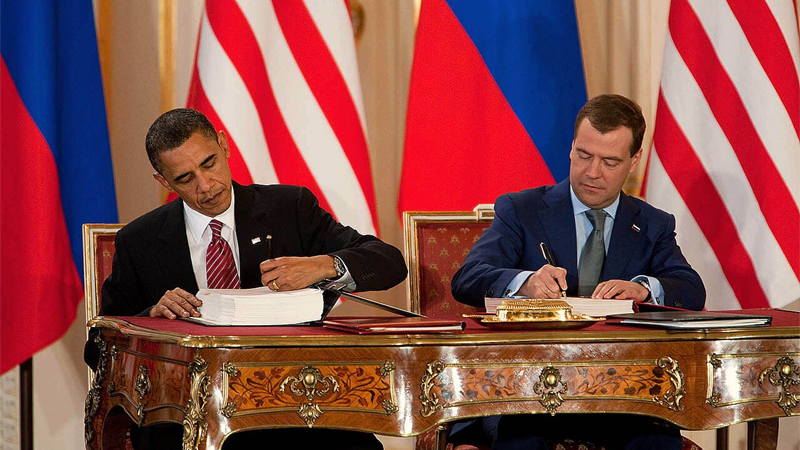
New START was signed on April 8, 2010, in Prague by US President Barack Obama and Russian President Dmitry Medvedev as a continuation of decades of efforts to limit the nuclear arsenals of the world's two largest nuclear powers. The treaty limited the number of deployed strategic nuclear warheads to 1,550 on each side and the number of deployed missiles and bombers launched from land or submarines to 700 units. A key part of the agreement was mutual verification mechanisms—data exchange and inspection visits to individual sites—which provided both sides with an overview of the actual state of their arsenals.
The text of the treaty explicitly allowed for only one five-year extension, which took place in 2021. In February 2023, Russia did not formally withdraw, but suspended its participation in the verification mechanisms, effectively weakening the treaty. This gradually reduced its effectiveness even before it expired.
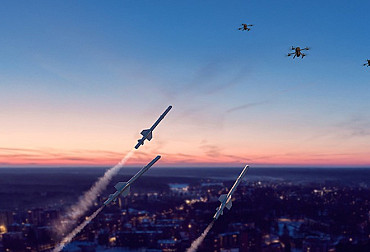
With the expiration of New START, the legally binding regime that set limits and transparent mechanisms for the two world powers' largest nuclear arsenals ceases to exist. Without inspections, notification regimes, and regular data exchange, there is more room for worst-case scenario estimates, which increases the risk of overestimating threats and strategic mistrust.
In September 2025, Russian President Vladimir Putin proposed informal compliance with the limits even after the treaty expires, but the US did not respond to this proposal with a binding agreement. President Donald Trump's administration is open to a new treaty, but on condition that it has a broader scope that reflects new classes of nuclear weapons, including shorter-range systems and other technologies not covered by New START.
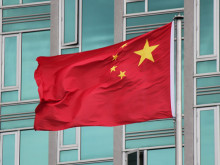
The strategic balance is more complicated today than when the treaty was created. China is not part of it, even though its nuclear arsenal is growing rapidly. Both the US and Russia have extensive strategic capabilities, but China is expanding its own nuclear potential and refuses to limit it under regimes that do not create a proportional framework for all actors. Beijing claims that its number of warheads is significantly smaller than that of the US and Russia and that the agreement should not apply to only two states.
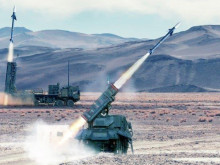
Without binding limits, there is increasing scope for different interpretations of strategic missions: the modernization of intercontinental delivery systems, the development of hypersonic weapon systems capable of circumventing existing defenses, and the growing importance of missile defense capabilities are changing the parameters of the strategic balance on which previous agreements were based. Future treaties would therefore have to address not only the number of warheads, but also technological changes and the verifiability of new systems, which is a politically and technically challenging task.
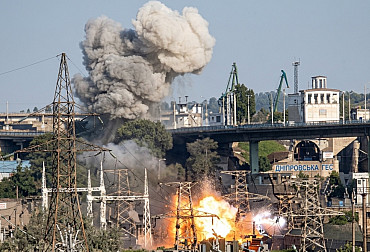
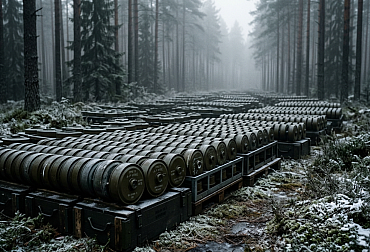
The end of New START does not mean the immediate start of a new nuclear arms race, but it does significantly increase uncertainty. Arms control has never been an expression of trust, but rather a tool for managing uncertainty. The absence of legally binding limits may lead to accelerated modernization of arsenals, as neither side can be sure that the other is not exceeding previously agreed ceilings. In an environment where diplomacy and security dialogue are limited, uncertainty can result in cautious but costly modernization programs that would run parallel to declarations of stability.
From a European perspective, the situation is particularly sensitive. Europe is not a direct party to these US-Russian agreements, yet the destabilization of the strategic balance would have significant implications. Following the United Kingdom's departure from the EU, France remains the only nuclear power in the European Union. Other European states are part of NATO's nuclear deterrence system and rely on the US nuclear umbrella, including the nuclear sharing mechanism deployed on European territory. Any change in US nuclear priorities or shift in strategic planning could have immediate implications for the security situation on the continent.
The Czech Republic also has a symbolic approach to the issue. The New START Treaty was signed in 2010 in Prague, which was chosen as a symbolic space for dialogue between East and West. As early as 2009, US President Barack Obama gave a speech in Prague on a "world without nuclear weapons," which became a symbolic reference to aspirations for the reduction of nuclear arsenals. History also shows that these issues affected specific logistical capacities in the territory of the former Czechoslovakia: during the Cold War, the Soviet Union established several top-secret storage facilities for nuclear warheads, which were used until the departure of Soviet troops in 1990.
The expiration of New START does not only mean the end of one treaty, but also the symbolic closing of a chapter in the history of nuclear governance. In the coming period, there will probably be no simple return to bilateral limits. A period is beginning in which arms control will have to move from a bilateral model to a broader, technologically more complex, and probably more difficult to negotiate framework.
For the Czech Republic and Europe, it is crucial to view this development not only as a distant geopolitical phenomenon, but as part of a broader trend that is shaping the security environment of the 21st century. Stability will depend not only on the number of weapons, but above all on the ability to maintain dialogue, transparency, and institutional mechanisms that reduce uncertainty and the risk of accidental escalation. In this sense, the question of what will come after New START is one of the most important challenges facing the current international security architecture.