














The Armed Forces of the Slovak Republic intend to continue expanding their capabilities in the field of drones
The ongoing war in Ukraine and the conflict between Israel and Palestine have clearly demonstrated the role of unmanned aerial vehicles in conducting combat operations. It is therefore no surprise that military circles are paying close attention to these systems and the means of defending against them. The Armed Forces of the Slovak Republic are no exception; in a recent post on Instagram, they highlighted the importance they place on introducing drones into their arsenal and outlined what has already been achieved in this regard.
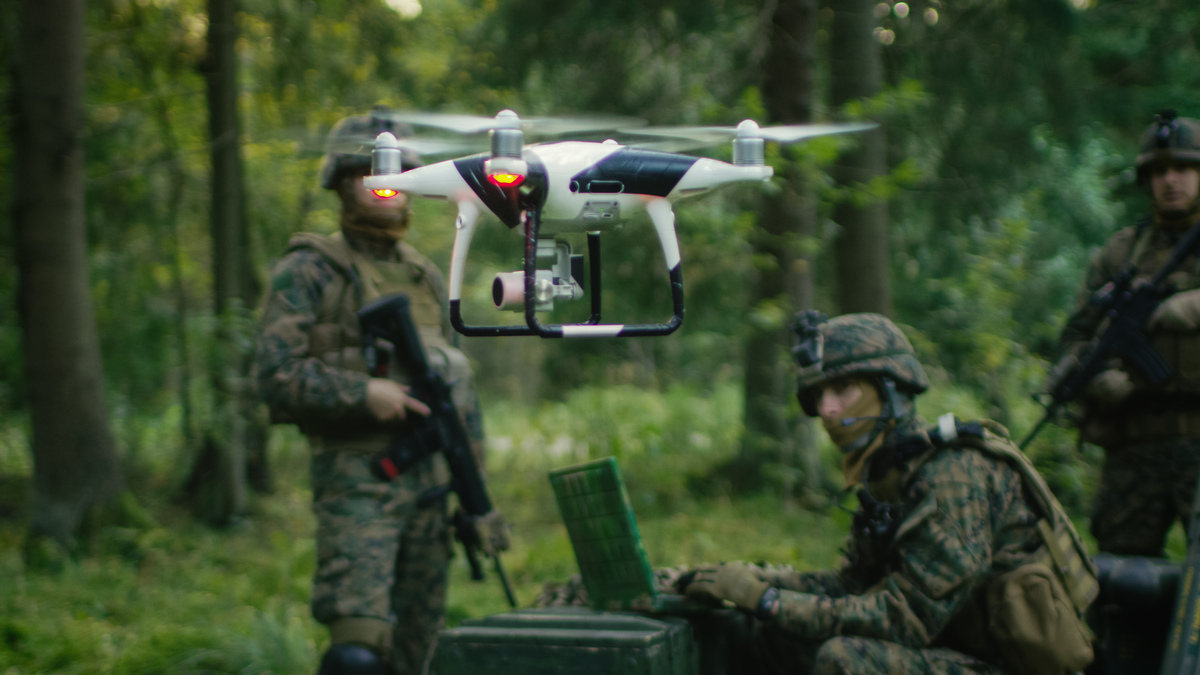
According to the Armed Forces of the Slovak Republic, the war in Ukraine clearly demonstrates the importance of drones in modern conflicts and the ever-growing need to incorporate this reality into the planning and training of the armed forces. Both in wartime and in peacetime, drones can pose a significant risk to a country’s military and critical infrastructure. Slovakia is already actively preparing for the modern threats posed by unmanned systems. In the summer of 2024, the 11th Independent Regiment was established within the Armed Forces of the Slovak Republic; its primary mission is to test and evaluate modern weaponry prior to its mass deployment, as well as to prepare relevant analyses and related documentation. According to the Slovak Armed Forces, the 11th Independent Regiment, together with the 7th Training Regiment, also provides training for unmanned system operators.
What is not mentioned in the Slovak Armed Forces’ Instagram post is the Slovak General Staff’s plan from early 2025 to train approximately 1,000 drone operators within one year. The training of operators is based on insights gained from the use of unmanned systems in the war in Ukraine. Although, for entirely logical reasons, the current status or success rate of this training is not disclosed – as this is sensitive information from the Ministry of Defense of the Slovak Republic regarding the combat readiness of its forces – according to available information, the training is proceeding gradually.

In addition to training, legislative measures are also being implemented to ensure the safe operation of unmanned systems within Slovak airspace. Last summer, the Slovak Ministry of Defense announced that it was the first institution in Slovakia to establish so-called drone geo-zones. These zones are designated areas where specific rules for drone operations apply. Their purpose is to secure critical military areas against unauthorized civilian aircraft, prevent accidents, and ensure the safe and uninterrupted conduct of training and operational activities by the Armed Forces of the Slovak Republic.
For the Armed Forces of the Slovak Republic to be able to speak of the successful implementation of unmanned systems into their arsenal, strategic and operational-tactical activities, and corresponding documentation, it is important to have not only well-trained personnel but also the appropriate technology. The Slovak Ministry of Defense discussed the purchase of drones several years ago, specifically the Bayraktar TB2, for example. However, to date, no agreement has been reached on the acquisition of unmanned systems, ranging from reconnaissance and surveillance drones to those capable of conducting offensive operations. It must be said, however, that compared to neighboring countries, such as the Czech Republic or Poland, Slovakia is still in the early stages when it comes to introducing a wider range of drones into its arsenal.
Overall, it can be said that the Armed Forces of the Slovak Republic and the Slovak Ministry of Defense are taking concrete steps toward greater integration of drones, though the pace is relatively slow. It goes without saying that the introduction of drones into the Slovak Armed Forces’ arsenal involves not only the purchase of these systems and the training of pilots, but also legislative and procedural steps that clearly define the activities of individual units of the Slovak Armed Forces and the conditions for integrating these assets into Slovak airspace. However, time is running out and technology continues to evolve. Therefore, it is necessary to create the conditions and infrastructure for these machines as quickly as possible so that Slovakia can gradually transition from the preparation phase to the implementation phase and the introduction of drones into its arsenal.
Related