









The Czech public and Ukraine: stabilizing solidarity in the context of NATO
A January survey by the STEM analytical institute shows that the Czech public's attitudes toward Ukraine and Ukrainian refugees have improved year-on-year. Interest in the conflict remains high, humanitarian aid enjoys stable support, and openness to the integration of refugees is growing. At the same time, however, strong political polarization persists on military and financial support, and most of society prefers a quick end to the war, even at the cost of territorial losses for Ukraine. The Czech public thus combines solidarity with realistic expectations of the conflict's development—similar to most Central European countries within NATO.
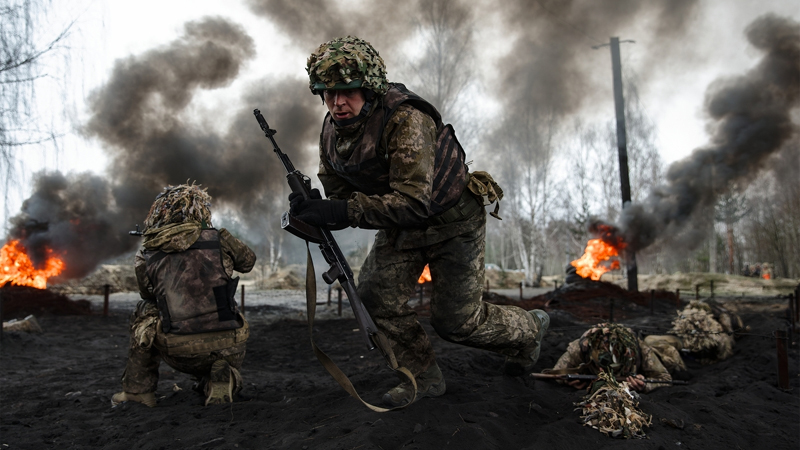
The war in Ukraine has been going on for several years, yet according to STEM data from January 2026, the Czech public's interest in the conflict remains high. The proportion of people who are actively interested in the war remains stable year-on-year. This is an important finding. In most protracted crises, there is a gradual decline in interest and attention. In the Czech environment, however, the conflict continues to be one of the key topics of public debate.
Interest is higher among men, respondents with higher education, and with increasing age. A significant portion of the public reports a "moderate" level of interest, which means rather passive consumption of information. A smaller group declares that they are not interested in the conflict at all—however, the data suggest that this is often not a lack of interest, but a conscious avoidance of the topic.

In the European context, this development corresponds to a trend whereby countries geographically closer to the conflict (especially in Central and Eastern Europe) show a higher level of interest in the long term than countries in Western or Southern Europe. In this respect, the Czech Republic is closer to the regional average than to its periphery.
The most noticeable shift compared to last year has been in the assessment of aid to Ukraine and the perception of refugees. Most Czechs agree that the government should continue to help Ukraine. There is broad consensus across the political spectrum, particularly on humanitarian aid, medical supplies, support for economic cooperation, and diplomatic or economic pressure on Russia. These forms of support have majority support in almost all voter groups.
Fundamental differences appear in military and financial aid. Here, society is significantly polarized according to party orientation. This pattern is not specific to Czechia. Similar political fragmentation can be observed in other Alliance countries, especially where foreign policy orientation is part of domestic political conflict. In countries such as Poland and the Baltic states, military support for Ukraine has long been significantly higher, while in southern European countries and some western European countries, it is also the subject of stronger domestic debate.
The Czech case is therefore not an exception, but part of a broader alliance pattern: humanitarian aid is almost universally accepted, while military support remains politically sensitive.
A significant shift is also evident in the perception of refugees from Ukraine. The proportion of those who consider them an asset has increased slightly, while the number of respondents who are unable to assess their impact has decreased. Approximately half of the population still perceives refugees as a potential threat, but the trend is toward greater acceptance.
Crucially, the overwhelming majority of the public supports the long-term stay of Ukrainian families on condition of integration—i.e., knowledge of the language, employment, and respect for the law. This conditional consent is in line with developments in other EU and NATO member states, where public support for integration is growing, especially where it is linked to an emphasis on labor market participation and economic participation.
The view of the future of the conflict is also crucial. Sixty-eight percent of respondents prefer a quick end to the war, even at the cost of Ukraine losing territory. At the same time, they consider this option to be the most likely scenario. A complete victory for Ukraine is the second most preferred option, but the majority of the public does not consider it highly likely. The Czech public thus displays a marked element of realism: it separates normative desires from analytical expectations.
STEM data show that Czech society has gone through three phases: initial mobilization of solidarity, followed by fatigue, and now a period of stabilization. The current phase is characterized by less emotion and more pragmatism.
Solidarity with the attacked country persists, but it is not unconditional. The public supports aid that is understandable, concrete, and verifiable. At the same time, a more skeptical attitude toward military support reflects the broader European debate on the risk of escalation, economic costs, and long-term security architecture.
Within NATO, this balance between solidarity and caution is crucial. The Alliance is based on collective defense, but its strength also depends on domestic support from member societies. Czech data suggest that the public is willing to accept long-term engagement if it is presented as part of a broader security strategy, rather than as an endless commitment without a clear goal.
It is also interesting that the public wants a quick end to the conflict, even though they admit that it may not be fair. This attitude is common in the European context and reflects broader concerns about a prolonged war on the Alliance's borders.
The STEM survey does not show radicalization or a dramatic shift. It shows stabilization. The Czech public remains supportive but pragmatic. It supports humanitarian aid, accepts the integration of refugees under certain conditions, and at the same time realistically assesses the possibilities of military developments.
This attitude is important in the context of the Alliance. Stability of support is more important to NATO than short-term emotional swings. In this respect, the Czech Republic is more in the mainstream than on the margins.
The biggest challenge for the future will not be the willingness to help, but the ability of political representatives to maintain public confidence that the aid has a clear framework, purpose, and strategic meaning. If this confidence is maintained, Czech society can remain a stable element in the broader security alliance space, even in a changing geopolitical environment.