















Vulnerabilities of Critical Infrastructure in the Czech Republic: Energy, IT, and National Defense
Critical infrastructure is becoming one of the primary targets in modern conflicts. For the Czech Republic, this is not a hypothetical risk, but a concrete security challenge. Today, the energy sector, digital systems, and their interconnectivity have a direct impact on the state’s ability to function and defend itself.

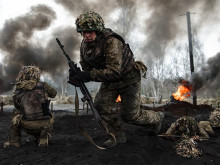
The security landscape in Europe has undergone a fundamental transformation. Modern conflicts are increasingly taking place on the so-called hybrid battlefield, where military, cyber, and economic pressures are combined. Critical infrastructure – such as energy grids, communication systems, and information technology – is becoming a primary target, as disrupting it can paralyze a state without direct military confrontation.
The Czech Republic is among the highly interconnected and industrialized economies. This brings efficiency and competitiveness, but also a high degree of systemic vulnerability. Moreover, infrastructure is strongly interconnected across sectors, meaning that a failure in one part can trigger a cascade effect.
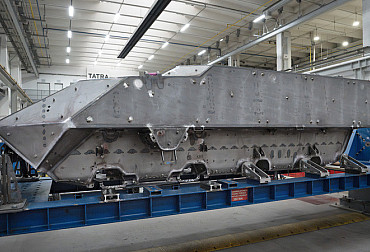
Another fundamental change is the blurring of the line between the civilian and military spheres. Infrastructure that is primarily civilian becomes a key element of national defense in a crisis situation.
The vulnerability of critical infrastructure in the Czech Republic is evident in three key areas: energy, digital systems, and their connection to national defense.
The energy sector remains a fundamental pillar of the state’s functioning. The Czech Republic has a relatively stable energy mix with a significant share of nuclear sources, which increases its resilience. Nevertheless, significant risks exist. The power grid is tightly interconnected with the European network, meaning that failures or attacks abroad can have a direct impact on Czech territory. The growing complexity of grid management, linked to the decentralization of production and pressure to decarbonize, simultaneously increases the demands on its security.
The second area is digital and communication systems. The Czech Republic is among the countries with a high degree of digitization, which is also reflected in its dependence on IT infrastructure. According to the National Cyber and Information Security Agency, 268 cyber incidents were recorded in 2024, representing a historic high. These incidents included, among other things, DDoS attacks, system breaches, and activities by state-sponsored actors.
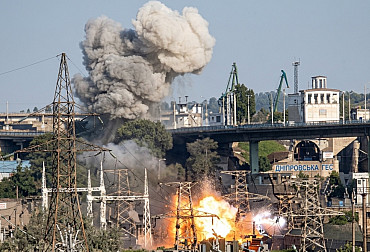
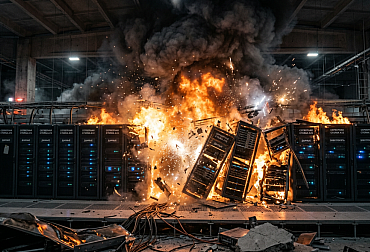

Another significant trend in recent years has been the activity of pro-Russian hacker groups focused on disrupting service availability. For example, in January 2026, DDoS attacks accounted for nearly half of all recorded incidents. This demonstrates that cyberattacks are not isolated incidents, but rather a long-term and systematic threat.
The concentration of technological solutions also poses a fundamental problem. Many key systems depend on a limited number of suppliers, creating a so-called single point of failure. A practical example is the global software outage in 2024, which affected the operations of institutions around the world, including the Czech Republic, and demonstrated how quickly a technical error can turn into a security issue.
The third dimension lies in the direct link between infrastructure and national defense. Modern armies depend on civilian systems – from energy and telecommunications to logistics. Disruptions to these systems thus directly affect the ability to conduct operations. Moreover, the Czech Republic is part of the alliance system, which means that its infrastructure is part of a broader security framework. Any weakening of domestic infrastructure can thus have an impact not only on national but also on collective defense.
Infrastructure vulnerability cannot be viewed as an isolated technical problem. It is a strategic issue directly linked to the resilience of the state. Modern conflicts show that the goal may not be to occupy territory, but to disrupt society’s ability to function.
The Czech Republic has certain advantages, such as a stable energy infrastructure and relatively strong institutions. At the same time, however, it faces the typical problems of advanced economies – high dependence on technology, interconnected systems, and growing cyber threats.
Preparedness is a key factor. It depends not only on technology, but above all on the ability to coordinate between the state, the military, and the private sector. It is precisely here that the greatest weakness often becomes apparent.
Critical infrastructure is becoming a new battlefield. The state’s ability to ensure its functionality in a crisis situation is just as important today as traditional military capabilities.
The Czech Republic will not be able to eliminate all risks, but it can significantly increase its resilience. This requires a systematic approach that integrates energy, cybersecurity, and defense planning.
The future of defense will not be decided solely on the front lines, but in data centers, energy hubs, and communication networks. And it is precisely there that the Czech Republic’s ability to withstand 21st-century conflicts will be determined.