














Defense Committee Discussed Drones, Military Communications, Veterans, and the Role of the Czech Defense Industry
At yesterday’s 7th meeting of the Defense Committee of the Chamber of Deputies of the Parliament of the Czech Republic, deputies discussed a wide range of topics, from the European Action Plan for Drone and Anti-Drone Security to the transport of allied troops, the Czech Army’s social media presence and care for war veterans, and the activities of the Defense Industry Section of the Czech Chamber of Commerce. The meeting was attended by Minister of Defense Jaromír Zůna, Chief of the General Staff of the Czech Armed Forces, Army General Karel Řehka, and other invited guests. The conclusion of the program was reserved for a closed-door meeting on the current situation in Ukraine and the Middle East.
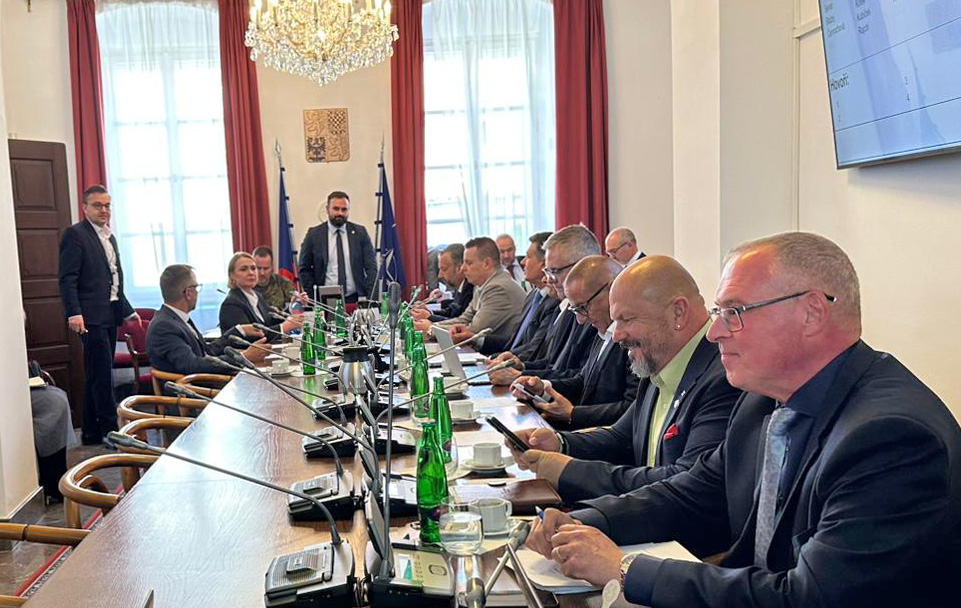
It became clear right from the start that the meeting would not be merely a routine discussion of the agenda sent out in advance. Members of Parliament (MPs) raised several additional topics that should be included on the agenda for the committee’s next meeting. These included, in particular, defense funding, the eligibility of expenditures under NATO methodology, the air defense concept, military recommendations regarding drones, and plans to build a military hospital and strategic complex in Letňany, Prague. The proposal to include an item regarding the possible construction of a military hospital in Letňany attracted the most attention. MP Ivan Bartoš pointed out that an investment in the tens of billions of crowns should be based on a clearly defined operational need of the Czech Armed Forces. “We found nothing of the sort,” Bartoš stated. According to him, it was not clear that the General Staff had identified a need for a second military hospital center in Prague. At the same time, he questioned the notion that such a project could serve as a tool to meet NATO defense spending targets. “The idea that this should be some sort of cushion to patch up insufficient spending is, in my view, invalid. It wouldn’t pass the alliance’s methodology,” the MP added. Former Defense Minister Jana Černochová also spoke out critically. “In the four years I served as defense minister, I didn’t receive a single request for another military hospital to be established in Prague or the Czech Republic,” she said. She noted that the Czech Republic already has military hospitals in Prague, Brno, and Olomouc. In her view, if a change to the system were to be considered, it would make more sense to strengthen the capacity of one of the existing hospitals and improve access to care for soldiers. However, the motion to include the item on the agenda ultimately failed. Five members voted in favor, eight against, and one abstained. The topic is set to return to the agenda of the next session, where it is expected to be addressed alongside defense funding, the eligibility of expenditures, and the air defense concept.
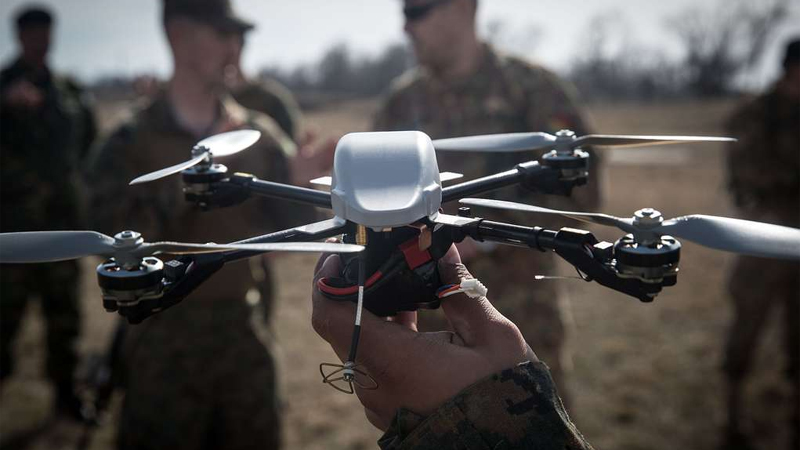
After approving the agenda, the committee discussed the European Commission’s communication to the European Parliament and the Council titled “Action Plan on Drone and Anti-Drone Security.” The document was referred to the committee by the Committee on European Affairs and was presented by Defense Minister Jaromír Zůna. “The document fits into the overall framework of activities being developed in this area within both the European Union and the Alliance,” the minister stated. He also noted that this is not an entirely new topic for the Czech Republic. “We have been addressing the prospect of autonomous systems and their significance on the future battlefield since 2022,” the minister said. Zůna noted, however, that the European document must be understood in a broader context. According to him, it is not just about drones in the narrow sense, but about the entire complex of autonomous systems—air, land, sea, and underwater. “The scope is much broader,” he emphasized, noting that major militaries, particularly the United States and China, are already thinking in terms of systemic conflict and the advanced use of autonomous technologies. The minister also reported that the Czech Republic is already taking certain steps. “There are currently five contracts underway for the procurement of drones for tactical use. In the first phase, this involves up to three thousand drones,” the minister stated. He also mentioned the Anti-drone project, implemented in cooperation with the Ministry of the Interior, which focuses on drone detection and the protection of critical infrastructure. According to Zůna, a unified information platform for state crisis management and civil-military cooperation is currently being developed. Zdeněk Jelínek, a representative of the Ministry of Transport, also joined the discussion. He emphasized that the European Commission’s document places emphasis on civil-military cooperation. “The challenge is to ensure that positive developments in the civilian use of drones are not stifled by security requirements, while at the same time allowing the military to continue to harness their potential,” he stated. Minister Zůna subsequently added that the world is already moving toward a so-called low-altitude economy, which he believes will be one of the dynamic segments of the future economy. The rapporteur for this agenda item, Lubomír Wenzl, presented the four pillars of the action plan: preparedness, detection, response, and defense readiness. He noted that the European Commission is responding to the growing number of drone-related incidents, including the violation of member states’ airspace, reconnaissance of critical infrastructure, and hybrid operations. “Drones have become an integral part of modern economies and societies. At the same time, however, recent incidents have revealed serious security risks,” Wenzl summarized. Committee Vice-Chair Jindřich Rajchl spoke during the debate, describing drones as one of the most critical issues in contemporary defense. “Anyone following the situation in Ukraine and the Middle East can see that modern warfare is effectively based on drone warfare,” he stated. According to him, the economic sustainability of a conflict is particularly crucial, as cheap drones can force the enemy to use disproportionately expensive air defense systems. “It is not sustainable in the long term to shoot down cheap drones using equipment costing millions of dollars,” added the committee vice-chairman, who called for the involvement of the Czech defense industry: “We have high-quality manufacturers here who are capable of supplying cutting-edge technology. We shouldn’t buy these things elsewhere if we can produce them at home.”
In this context, the debate briefly turned to organizational changes at the Ministry of Defense, specifically the abolition or transfer of part of the Industrial Cooperation Section’s responsibilities. Minister Zůna explained that the goal of the reorganization was to streamline the ministry’s structure. “It wasn’t a matter of the military losing anything. Key responsibilities that cannot be separated from the Ministry of Defense’s activities remain with us,” he said.
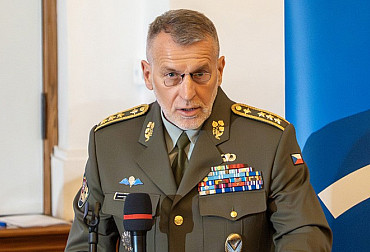
The Chief of the General Staff of the Czech Armed Forces, Lt. Gen. Karel Řehka, returned to the topic of drones, noting that while the action plan does not specify exact numbers of systems, it correctly identifies the scope of the problem. “It concerns industrial capacity, supply chain security, legislation, mandatory registration, and other matters,” he said. He also noted that the Czech Republic is already developing a similar approach at the national level. A separate committee was established under the State Security Council, where the Ministry of Transport, together with the Ministry of Defense, is working on a comprehensive solution to drone-related issues. Members of Parliament were also interested in the financial coverage of these plans. A question was raised as to whether the procurement of drones would come at the expense of other acquisition projects or exceed the current budget outlook. The minister did not provide specific figures but confirmed that autonomous systems are among the ministry’s priorities. “In the first phase, five projects are underway totaling roughly 1.7 billion crowns,” he stated. In the long term, however, he noted, the amounts will be much higher. “We are talking about billions of crowns through 2040,” Řehka added.
Another item on the agenda was information regarding overflights and transits of foreign armed forces through the territory of the Czech Republic in the second half of 2025. Defense Minister Zůna presented the report as a regular update providing an overview of landings, overflights, and transits by allied forces. These movements were primarily related to NATO activities, foreign operations, and military exercises. According to the data presented, a total of 2,706 air transports were carried out, including 467 charter flights and 193 landings by armed forces of other states. On the ground, there were 899 separate movements, 81 road convoys, and 15 rail transports. MPs took note of this information.
This was followed by a segment on the Czech Army’s social media presence. This segment was included in response to the media controversy surrounding plans to create a separate army channel on YouTube and the much-discussed episode of the Kamufláž podcast featuring President Petr Pavel. The Minister of Defense stated that he did not wish to revisit all the details he had already explained in the Chamber of Deputies and in the media, but considered it necessary to describe how communication within the ministry functions. “Separate profiles make sense to distinguish between the political-strategic and professional-military levels. However, the key is consistent content sharing and synergy, not the creation of competing or conflicting narratives,” said Zůna. The Chief of the General Staff subsequently emphasized that social media is an essential communication tool for the military. According to him, the goal is to inform the public about the army’s activities, strengthen its credibility, and support recruitment. “We strive to be less formal, to focus on training, deployment, and technology, and to inform, inspire, and recruit,” said Řehka. According to him, the military’s presence on social media has been growing over the long term, and this positive trend is also reflected in its reputation. However, Jindřich Rajchl, a reporter for the program, described the coordination of communication between civilian and military leadership as problematic. “I consider this method of communication, particularly the coordination between civilian and military leadership, to be deplorable,” said the Chief of the General Staff, noting that the controversy surrounding the Kamufláž podcast showed that the public was left with a bitter aftertaste, primarily because “the right hand doesn’t know what the left is doing.” Řehka also drew attention to the individual social media posts by some top officials of the army or the ministry. “It is not good for everyone to say whatever they please on social media,” he said. Minister Zůna reported that he had ordered an investigation into the entire matter. “The purpose of the investigation is to determine whether there is a procedural flaw or whether someone violated procedural protocols,” he said. Řehka described the situation from his perspective and acknowledged that procedural ambiguities may have occurred. He emphasized, however, that the conversation with the president was not political and that the military intended to release the podcast as part of its standard communications. During the debate, Jana Černochová noted that she had already addressed similar issues regarding communication coordination during her tenure as head of the ministry. “Kamufláž is a great project. Let the military continue with it,” she said, while also pointing out that the defense minister should not have to learn about major military initiatives from the media. At the conclusion of the debate, there was agreement that the Ministry of Defense’s social media communication guidelines would need to be refined and updated. MP Rajchl proposed adjourning the item until the next session, by which time the final investigation report should be available.
According to Committee Chairman Josef Flek, an item dedicated to the activities of the Ministry of Defense’s Department for War Veterans and War Graves was included specifically for new committee members. “I included it precisely so that new members of Parliament could be made aware of the importance of what this department does,” Flek stated. Colonel Robert Speychal, director of the Ministry of Defense’s Department for War Veterans and War Graves, presented the department’s activities, guiding the members through a presentation focused on the system of care for veterans. Speychal noted that the department is responsible for several key laws, including legislation concerning war veterans, war graves and memorial sites, and the Third Resistance.
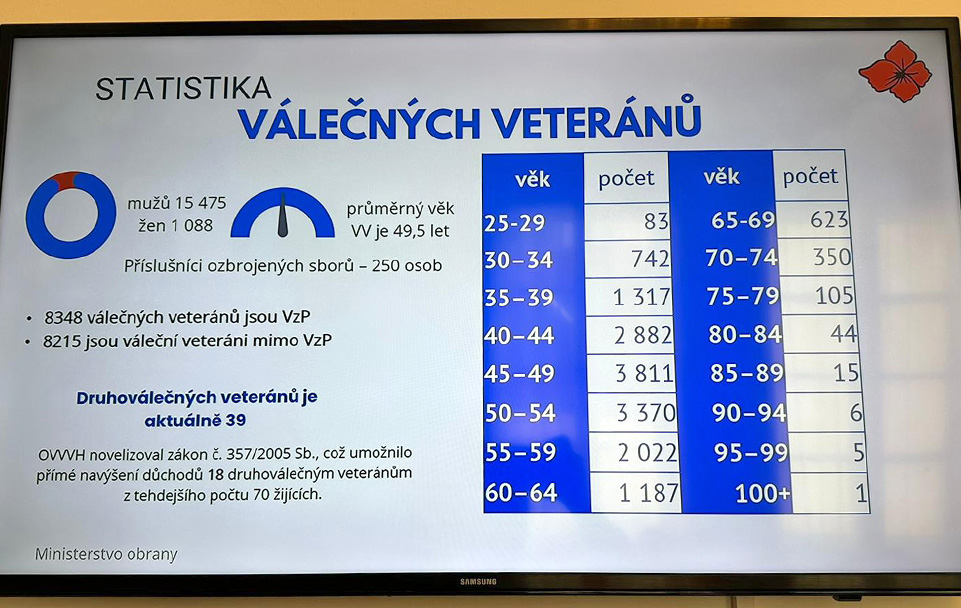
According to him, the Agency for the Support of War Veterans, community centers, and regional outreach offices play a significant role. “Outreach workers are our extended hands in the field,” he said, noting that they are often experienced soldiers from missions who assist not only with administrative tasks but also with social and community care. Colonel Speychal devoted a large part of his presentation to psychosocial care. He highlighted cases of post-traumatic stress disorder as well as “blast syndrome”—the consequences of repeated explosions that can manifest themselves years later. “We need to strengthen the network of experts in psychosocial care, both within and outside the military,” he said. In addition to health aspects, he also highlighted the growing need for inpatient care for aging modern-day veterans and the lack of capacity. Lubomír Wenzl, the rapporteur for the item, identified the year 2025 as a milestone in the care of war veterans, thanks in part to the adoption of an amendment to the law that made it possible to expand support, grant programs, and fieldwork.
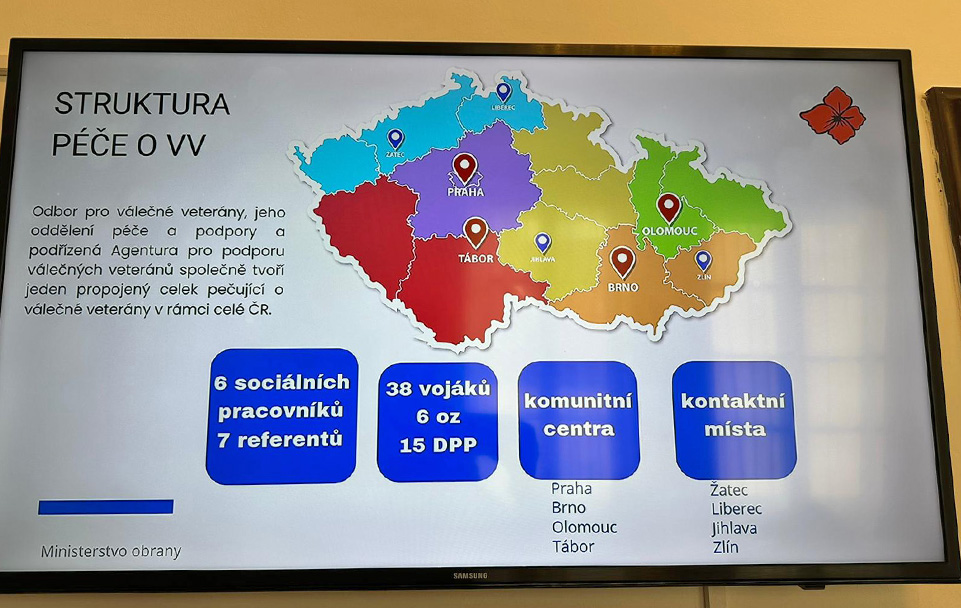
Jana Černochová praised the cross-party cooperation in drafting the legislation. “This shows that, when there is a will, the coalition and the opposition can agree on positive measures,” she said. At the same time, she called for greater emphasis on PTSD diagnosis and psychological care for soldiers. Minister Zůna confirmed that the department will be newly integrated into the planned legislative and legal section, while its link to the ministry’s leadership is to be maintained.
The open portion of the committee meeting concluded with an item dedicated to the activities of the Defense Industry Section of the Czech Chamber of Commerce. The chair welcomed the section’s chairman, Lubomír Kovařík, secretary Milan Kašík, and section advisor Jana Marko. Representatives of the section emphasized that the Czech defense industry represents a significant part of the national economy with high added value, approximately 25,000 employees, and a strong export orientation. According to their estimates, the sector’s annual revenue amounts to hundreds of billions of crowns, and its fiscal contribution to the state is also significant. Kovařík noted that the section brings together roughly fifteen of the largest companies operating in the Czech Republic that invest in research, development, and innovation.

He listed systematic communication between the state and the defense industry, the creation of a stable legislative environment, and the integration of the defense industry as a full-fledged component of the state’s defense system among the section’s main objectives. “We want the defense industry to become a full-fledged pillar of the Czech Republic’s defense,” said Kovařík, the section’s chairman. An important topic was the involvement of domestic industry in armed forces acquisition projects, including technology transfer, licensed production, and ensuring the lifecycle of equipment. Section representatives also highlighted the need to reform acquisition processes, which should be faster and more flexible. In the legislative part of the presentation, the need was raised to revise crisis legislation, strengthen export support tools under the “government-to-government” regime, and establish a national implementing entity for international defense projects. The section also expressed interest in closer cooperation with the Defense Committee, including the possibility of formalizing this through a memorandum. During the debate, the question arose as to whether such cooperation would be in compliance with the lobbying law. Representatives of the section assured the MPs that all activities are conducted transparently within the framework of the Chamber of Commerce and the relevant registries.
During the committee meeting, we posed the following survey question to the members of Parliament: What specific steps should the Czech Republic take in the next 12 months to strengthen its actual defense capabilities—beyond simply increasing the defense budget?
Jiří Horák (KDU-ČSL), Vice-Chairman of the Committee
Strengthening our defense capabilities is a long-term endeavor. It is not an area that can be changed overnight with a snap of the fingers or a single budget decision. Building a modern army requires years of planning, stable funding, personnel training, and well-thought-out investments. That is precisely why I consider the government’s most important task over the next 12 months to be establishing clear and credible multi-year funding for the Czech Armed Forces for at least the next five to ten years. The worst thing that can happen to the military is unpredictability and budgetary fluctuations, which hinder acquisitions or the recruitment of new soldiers. If the army knows what resources it can count on in the medium and long term, it can systematically modernize its equipment, secure more favorable contracts, and build the capabilities that the Czech Republic truly needs. This is the foundation of real defense capability, not day-to-day improvisation. At the same time, I expect the government to unequivocally commit to fulfilling our alliance obligations within NATO. This means, in particular, continuing the development of a heavy brigade as the Czech Republic’s key contribution to collective defense, strengthening air defense, logistics and support capabilities, troop mobility, and the ability to rapidly receive and support allied forces on our territory. The Czech Republic must be a reliable ally that not only declares its commitments but also fulfills them.
Jindřich Rajchl (SPD), Vice Chair of the Committee
Completely reevaluate the concept of our army’s armament so that it corresponds to current and future trends in the conduct of military conflicts (purchasing Leopards, Supacats, and other equipment at this time—which, in the era of “drone wars,” have a battlefield lifespan of mere minutes—is a blatant waste of money). Furthermore, shift focus to Czech defense companies (drone networks, etc.) and develop a comprehensive recruitment policy.
Ivan Bartoš (Pirates), committee member
The government should immediately and publicly confirm that it will meet this year’s minimum target of 2% of GDP for defense and that it will exceed it so that it is realistic to achieve the target of 3.5% + 1.5% for related investments by 2035—and, of course, adjust the budget accordingly. These investments must not be based on a random outburst by the prime minister; they cannot be mere Potemkin villages. The increase must be focused on the NATO Capability Targets 2025, and the priority must be launching projects to enhance capabilities in the area of air defense, particularly against the mass use of inexpensive unmanned aerial vehicles (drones). Launching such projects within the next 12 months is entirely feasible, provided funds are allocated for them. Furthermore, the appeal of the Active Reserves should be enhanced—adjusting compensation, particularly during training periods, as well as taking other steps—and this too can be accomplished within a year. Of course, we must not forget to complete the heavy brigade and other objectives that will require funding—such as the engineer battalion. But we cannot accomplish everything in a year; the neglect of the military has lasted 20 years. These are the priorities we should set for the coming year. Or rather, this should have been happening since October; we have wasted half a year.
Jana Černochová (ODS), committee member
Over the next twelve months, the Czech Republic should focus primarily on five specific actions.
First, accelerate projects that are already underway and have a direct impact on the army’s combat readiness—particularly in the areas of ground forces, air defense, unmanned systems, ammunition, logistics, and command and control. We need fewer presentations and more actually delivered equipment, ammunition, spare parts, and trained personnel. Second, significantly bolster ammunition and material reserves. The war in Ukraine has clearly shown that modern conflict is not a matter of a few days, but of endurance. Without sufficient reserves of ammunition, fuel, medical supplies, spare parts, and repair capabilities, defensive capacity will quickly be exhausted. Third, we must continue to recruit and retain soldiers. The military needs not only new equipment but also people who know how to operate it. This means maintaining competitive service conditions, streamlining recruitment processes, eliminating unnecessary bureaucracy, and continuing to work with the active reserve. Fourth, we must involve the Czech defense industry far more seriously. Not formally, but practically: production, maintenance, repairs, development, stockpiles, and the ability to rapidly scale up production in a crisis. Without a domestic industrial base, we will be dependent at a critical moment on what others supply us—and whether they supply us at all. And fifth, we need to strengthen the resilience of the state as a whole. Defense capability is not just a matter for the military. It includes cybersecurity, critical infrastructure protection, the state’s ability to communicate with citizens in a crisis, civil protection, strategic reserves, and the preparedness of local governments. In short: the budget is the foundation, and the real result must be an army that has personnel, equipment, ammunition, supplies, industrial support, and clear command. Next year, we should place greater emphasis on specific capabilities that will truly make the difference in the event of a crisis.
Matěj Hlavatý (STAN), committee member
Increasing the budget is, of course, a necessary but not sufficient condition. That is why I believe that over the next 12 months we should implement at least the following measures: First, reform the procurement cycle for small and medium-sized production runs. Experience from Ukraine shows that success goes to those who can act in weeks, not years. We need a legislative framework for rapid procurement up to a certain volume, which will allow the military and Czech manufacturers (from larger companies to startups) to enter into short-term contracts with rapid product iteration. Second, the continuation of the Czech ammunition initiative. Abroad, this remains our flagship program, and the NATO Secretary General publicly commends it. Diminishing its importance would mean losing a position we would never regain, and Ukraine would face a gap until a new coordinator is found. Third, drone capabilities and cost-symmetric defense against drones. The incident in Poland, where Alliance air defense shot down Gerber drones with missiles worth millions, demonstrates the unsustainability of the cost ratio. The state must provide stable domestic demand, protection of production capacities, and participation in projects that will reduce the costs of neutralizing cheap long-range drones. Otherwise, others will bypass us, and we will simply be buying ready-made solutions abroad. Fourth, supply chain resilience. We cannot sustain any drone or munitions capabilities in the long term without access to critical inputs: optical fibers for fiber-optic drones, carbon fibers, brushless motors, battery cells, chips, and even filament for 3D-printing components. We should compile a quantified inventory of these materials and, where we currently depend on Asian suppliers, support domestic or European production, or dual-use research at universities and startups.
Lubomír Wenzl (ANO), committee member
Over the next 12 months, the Czech Republic must move from formal plans to a genuinely functional defense capability. It is not enough to simply increase the budget; the key is its rapid and effective utilization. The priority is to immediately replenish ammunition stocks, strengthen short-range air defense, and massively develop drone and electronic capabilities. At the same time, it is necessary to significantly expand the active reserves, simplify their recruitment, and ensure regular training. Equally important is the implementation of a truly functional mobilization system that stands up in practice, not just on paper. The domestic defense industry must play a crucial role, including companies such as the Czechoslovak Group, which can ensure production and servicing even in crisis situations. At the same time, it is necessary to strengthen the protection of critical infrastructure and cybersecurity in cooperation with the National Cyber and Information Security Agency. It is also essential to expand realistic training for the military and civilian units and systematically prepare the public for crisis situations. Only then will the state be able to respond quickly, in a coordinated and effective manner, from the very first days of a potential crisis.