












The Performance of CSG Shares and Its Significance for the Czech Defense Industry
The CSG Group went public this year as a symbol of the European defense boom. However, just a few months after its record-breaking IPO, its shares have fallen sharply from their post-IPO highs. This is not just a trend affecting a single company. The decline in recent months has impacted virtually the entire European defense sector, including the largest publicly traded companies. For example, Germany’s Rheinmetall, which investors now view as one of CSG’s closest European peers, has also undergone a significant correction since January 2026. Developments surrounding CSG thus indicate that capital markets are beginning to evaluate European arms companies – and by extension, the entire Czech defense industry – much more strictly.

When CSG went public on Euronext Amsterdam in January 2026, it was one of the largest defense IPOs in European history. The company was targeting a valuation of around €25 billion, and the IPO was expected to raise up to €3.8 billion. At the time, investors viewed European defense contractors as one of the main benefits of the new geopolitical reality following Russia’s invasion of Ukraine. Defense spending was rising, European armies were replenishing their ammunition stocks, and the market anticipated long-term growth in the sector.
Moreover, CSG offered the story of a rapidly growing Central European group that had managed to combine the Czech defense industry with global expansion. Michal Strnad’s company dramatically expanded its production of ammunition, ground equipment, and defense systems within a few years and, through acquisitions, entered the United States and Western Europe. The $2.2 billion acquisition of the American company The Kinetic Group was among the largest defense transactions in the history of Czech industry. However, the optimism from the beginning of the year was gradually replaced by nervousness. Shares fell from an issue price of 25 euros to below 16 euros, and the company’s market capitalization dropped from roughly 25 billion euros to less than 16 billion.

At first glance, the current developments may seem illogical. CSG’s financial results, however, remain very strong. For 2025, the group reported revenue of €6.74 billion, a year-over-year increase of 71.7%, operating profit before interest and taxes (EBIT) of over €1.6 billion, and a backlog of €15 billion. The company also states that the value of other business opportunities under discussion and negotiations for future contracts (pipeline) amounts to as much as 27 billion euros.
This, however, is where the main problem begins. Investors today no longer evaluate just past growth, but above all the quality and long-term sustainability of future business. CSG is no longer a traditional Czech arms manufacturer, but a large defense-industrial group built on a combination of manufacturing, corporate integration, acquisitions, and commercial activities. A key part of its business consists of large-caliber ammunition, ground equipment, logistics vehicles, radars, and defense electronics. The group includes, for example, Excalibur Army, Tatra Defence, MSM Group, Fiocchi, and the American company The Kinetic Group, as well as, in part, Tatra Trucks. However, rapid expansion is simultaneously increasing pressure on transparency, cash flow stability, and the credibility of reported production capacities. It is precisely in this area that the first significant doubts have emerged among some investors.
A turning point came with a report by the American investment platform Hunterbrook Capital – an entity linked to a short-selling fund – published in early May 2026. This is therefore not a traditional media outlet or independent investigative journalism, but a platform run by an entity that stands to gain financially from a decline in stock value. Critics therefore point to a potential conflict of interest and the selective interpretation of certain information.
Among other things, Hunterbrook questioned the actual scale of CSG’s production capacity, the structure of its ammunition business, and certain information presented during the company’s initial public offering (IPO). One of the report’s main arguments was the claim that a significant portion of CSG’s ammunition segment relies more on resale, refurbishment, or modernization of older stockpiles than on its own large-scale ammunition production. CSG rejected these claims, stating that the report contains inaccuracies, misinterpretations, and speculative conclusions. The group also emphasized that it possesses extensive in-house production capabilities and that claims of a dominant reliance on the refurbishment of older ammunition do not reflect the reality of its ammunition business.
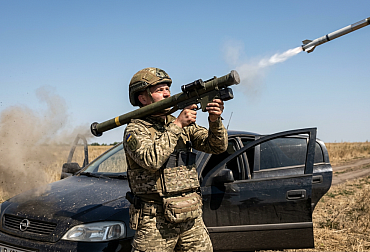

Nevertheless, the market reacted very sharply. Shares fell by more than 13% in a single day and briefly lost as much as a quarter of their value during trading. It is important to understand, however, that the problem lies not solely in the Hunterbrook report itself. Rather, it raised a broader question concerning the entire European defense sector: how to distinguish companies that are genuinely building long-term production capacity from those whose growth is largely driven by an extraordinary geopolitical situation and rapid acquisition-driven expansion.
Such a trend is not limited to CSG. Some of Europe’s largest defense companies also underwent significant corrections in 2026. Germany’s Rheinmetall, often considered one of Europe’s benchmark defense stocks, traded approximately 38–44% below its previous highs during the spring months of 2026, despite the company continuing to report strong financial results and a contract backlog reached approximately €73 billion in the first quarter of 2026. Investors are increasingly sensitive not only to the geopolitical outlook and the pace of growth in defense spending, but also to companies’ ability to increase production over the long term, efficiently fulfill contracts, and translate record order volumes into stable financial results.
Developments in the European defense sector thus point to a broader shift in the investment landscape. Markets no longer value merely exposure to the defense industry; instead, they are increasingly distinguishing between companies with a robust industrial base and those whose growth is largely driven by exceptional market conditions.
In this regard, CSG finds itself in a difficult position. The market currently views the company as a potential European leader in the defense industry that could compete with major Western European groups in the future. At the same time, however, investors are beginning to make demands similar to those common among the largest publicly traded defense companies – namely, a high degree of transparency, stable cash flow, clearly demonstrable production capacity, and a high-quality corporate governance system.
At the same time, however, investors’ preferences themselves are changing. Today, the market increasingly favors defense companies that, in addition to traditional defense engineering, are expanding into technologically advanced areas such as air defense, anti-drone systems, robotics, autonomous systems, or the implementation of artificial intelligence. It is precisely here that a significant part of the current transformation of the defense industry is taking place.
CSG is actively working to advance in this direction. For example, the group is involved in the production of propulsion systems for unmanned aerial systems (UAS) and is significantly expanding its activities in the field of air and anti-drone defense. Another significant milestone was the award of a contract for a multi-layered air defense system in Southeast Asia worth approximately $2.5 billion. It is precisely this ability to combine traditional manufacturing with high-tech segments that may become one of the key factors by which investors will assess the long-term potential of defense groups in the future.
The CSG case is also important from the perspective of the Czech Republic. The Czech defense industry is experiencing its strongest period since the end of the Cold War. European rearmament is creating an extraordinary opportunity for manufacturers of ammunition, vehicles, radars, and specialized systems. At the same time, however, a fundamental change is taking place: the sector is rapidly professionalizing and coming under much stricter oversight by capital markets.
This means that simply capitalizing on high demand is not enough. Companies will have to demonstrate long-term industrial capacity, the ability to scale production, supply chain stability, and a high level of transparency. In this regard, CSG serves as a test of the Czech defense industry’s maturity. If the group can restore investor confidence, stabilize its communication with the market, and confirm that its growth is based on a real production base and technological transformation toward modern defense systems, it could become one of the key European players. If not, the current decline could mark the beginning of a broader reassessment of valuations in the defense sector.
However, it is also important to note that a decline in stock prices does not automatically indicate a company’s weakness. The defense sector is extremely sensitive to geopolitical expectations, interest rates, and investor sentiment. Following the sharp rise in European defense stocks, a certain degree of correction was to be expected.
The performance of CSG shares is thus not just the story of a single company. It is one of the first significant signals that the European defense boom is entering a new phase. A phase in which the geopolitical narrative and rapid growth will no longer suffice, but rather the quality of the industrial base, the reliability of data, the technological level of products, and the ability to withstand market pressure in the long term will be decisive.
This is an important moment for the Czech Republic. The domestic defense industry has a real chance to become a significant part of the European security architecture. However, this will require not only production capacity but also the ability to operate according to the standards of global capital markets. It is precisely here that it will be decided whether Czech arms manufacturers will become long-term European players or merely short-term winners of an extraordinary geopolitical situation.
Related